
Should I Install Artificial Turf, Gravel, or Natural Grass for My Victoria Dog's Backyard?
By Anna Hakim & Perry Fanthorpe, Happy Homes Team at eXp Realty
Best Backyard Surface for Dogs in Victoria BC:
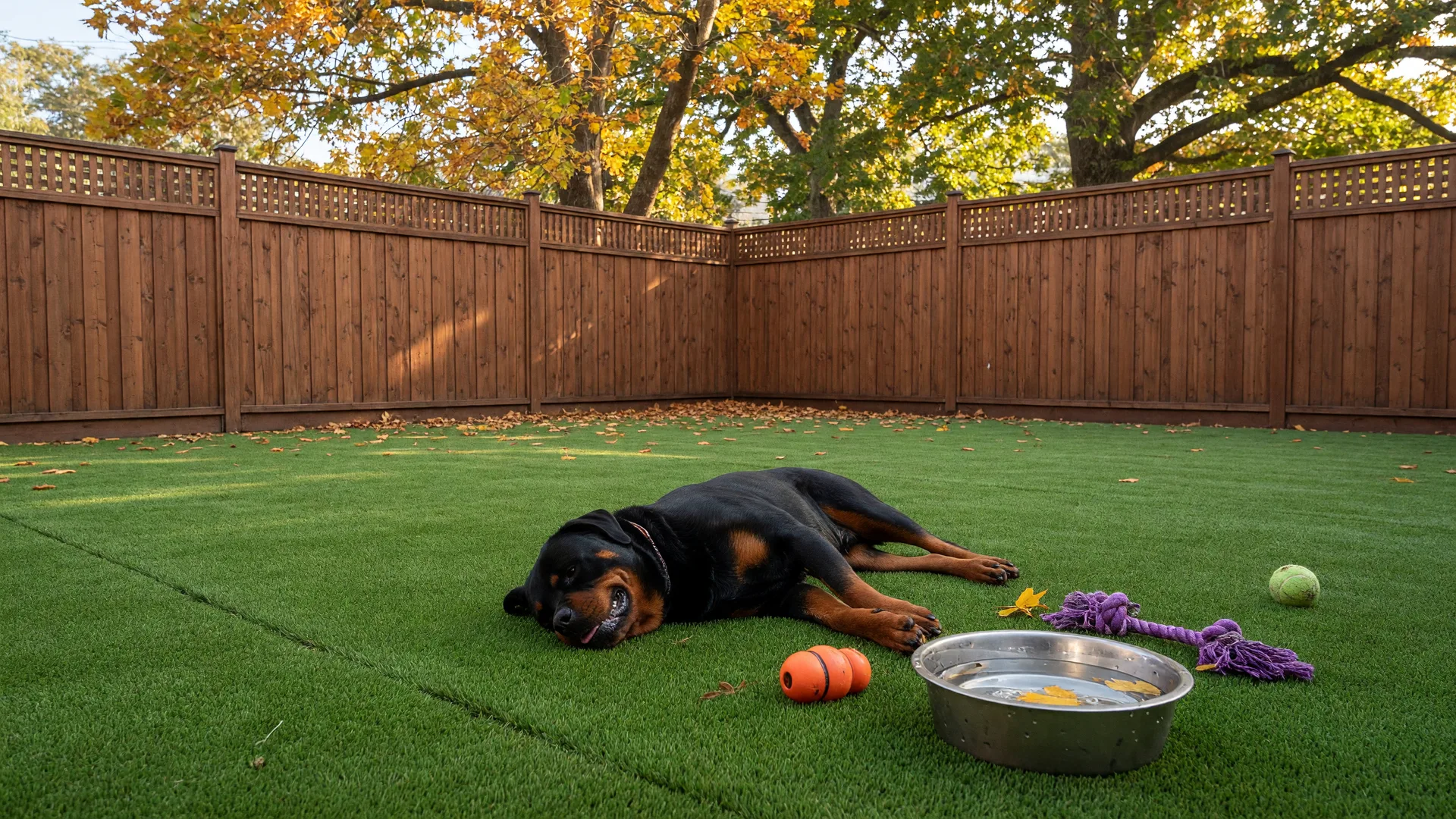
If you have a dog in Victoria, your backyard is going to get a workout. By November, natural grass turns into a mud pit that follows your dog through the house on every pair of paws. By February, the high-traffic areas around the back door are bare dirt. By March, you are looking at the yard and wondering if there is a better option. There is. But the right choice depends on how your dog uses the space, how much you want to maintain, and what you can spend upfront.
I have had both natural grass and artificial turf yards with Ziggy and Sahara. Perry went through the turf installation process two years ago. Here is what I have learned about what actually works in Victoria's climate.
What is the best backyard surface for dogs in Victoria's rainy climate?
For most dog owners in Greater Victoria, pet-specific artificial turf with antimicrobial infill and a proper drainage base is the best option. It eliminates the mud problem entirely, handles heavy dog traffic, does not develop dead spots from urine, and lasts 15 to 20 years with basic maintenance. But it costs more upfront than any other option, and not every yard is a good candidate for installation.
Artificial turf: what you need to know for a dog yard
Cost: $8 to $12 per square foot installed. For a typical Victoria backyard of 500 to 1,000 square feet, expect $4,000 to $12,000 installed. This is the most expensive option by a wide margin.
Durability: Pet-specific turf with antimicrobial infill handles heavy dog traffic without developing bare spots. The turf itself withstands digging better than natural grass. Most installations carry a 15-year warranty and last closer to 20 years with proper care.
Maintenance: You need to rinse the turf periodically (especially after urine), apply enzyme treatments to control odor, and remove solid waste promptly. A leaf blower keeps the surface clear of debris. Expect 10 to 15 minutes of maintenance per week during heavy use, less during dry periods.
Installation requirements: The turf needs a compacted base layer (usually crushed rock or decomposed granite) for drainage. Victoria's clay-heavy soil means most yards need proper grading before installation. Without good drainage, water pools under the turf and creates odor problems.
Pros: No mud. No bare spots. No urine burns. Consistent surface year-round. Dogs can run and play without slipping. Senior dogs get consistent traction.
Cons: High upfront cost. Can absorb heat on the few hot summer days Victoria gets (though this is less of a problem here than in Calgary or Toronto). Requires periodic deodorizing treatments. Not all Victoria installers have experience with pet-specific turf.
Natural grass: the comfort option that rarely works for dogs in real life
Cost: Low upfront cost (sod at $0.50 to $1.50 per square foot, or seed at $0.05 to $0.15 per square foot), but high ongoing maintenance costs.
Durability: Poor. A single medium-sized dog running the same path every day creates a dirt track within weeks. Two dogs doing the same thing turn a 500-square-foot yard into a mud patch by mid-December. Grass clover and microclover blends handle dog traffic better than standard turf grass, but nothing handles daily dog traffic through a Victoria winter.
Maintenance: High. You need to reseed bare spots in spring, aerate annually, apply moss control (Victoria's wet shade grows moss on grass faster than grass itself), and manage urine burn spots with regular watering. If you have a lawn care service, add $50 to $100 per month during the growing season.
Pros: Soft under paw. Naturally cool in summer. Most familiar surface for dogs. Lowest upfront cost.
Cons: Muddy from October through March. Bare spots from traffic and urine. Requires moss control in Victoria's climate. Dogs track mud into the house constantly during rainy season. Needs full sun to stay healthy, which many Victoria yards do not get.
If you are determined to keep natural grass, the best approach is a hardy grass-clover mix, good drainage (add sand or organic matter to the soil), and acceptance that the yard will have a dormant brown-and-mud look from November through March. Some dog owners designate a high-traffic "dog zone" with an alternative surface (pea gravel or turf) and keep the rest of the yard as ornamental grass the dog does not use.
Gravel: decent drainage, bad for play
Cost: $2 to $4 per square foot for pea gravel or crushed granite. The cheapest surface option that still drains well.
Durability: Excellent. Gravel does not wear out. You may need to top it up every few years as the stones settle or get displaced.
Maintenance: Low. Rake it occasionally to keep it level. Remove solid waste promptly. Add a fresh layer every few years.
Pros: Excellent drainage. No mud. No urine burns. Low maintenance. Low cost.
Cons: Stones get lodged between paw pads, causing pain, abrasion, and potential infections. Sharp gravel cuts paws. Uncomfortable for dogs to run on, lie on, or play fetch on. Lacks cushioning for senior dog joints. Shifts underfoot. Dogs cannot run on it the way they can on turf or grass.
Gravel works best as a designated potty area at the edge of the yard, not as the main play surface. If you go this route, use smooth pea gravel (not sharp crushed stone), keep a 1-inch to 2-inch depth, and provide a separate grass or turf area for running and playing.
What about hybrid approaches?
Most dog owners I know who have solved this problem use a hybrid approach. The most common setup is a small artificial turf run (roughly 200 to 400 square feet) for daily potty breaks and play, combined with a natural grass section for the rest of the yard. The turf handles the heavy traffic zone. The grass handles the ornamental area. This keeps the mud out of the house and the cost lower than a full-yard turf installation.
Alternatively, some owners install a pea gravel potty zone near the back door (where the dog goes out first thing in the morning) and keep the rest of the yard as grass that gets less traffic. The gravel zone drains instantly and gives the dog a consistent surface for quick outings.
How does your fence affect the surface choice?
If you are installing turf or gravel, you need to edge it properly against the fence line. Dogs running along a fence can displace loose gravel or lift the edge of turf. A solid border (pressure-treated timber, metal edging, or concrete curb) keeps the surface in place. Cedar fencing is standard in Victoria, but any fence that touches the ground needs to be securely anchored and have a gap-free bottom. Some dogs will tunnel under a loose fence, and an expensive new turf surface does not stop a determined digger.
What about moss, the real Victoria lawn problem?
Victoria's climate grows moss on everything. Natural grass lawns develop moss patches that smother the grass, especially in shaded yards. Most homeowners apply moss control products twice a year (spring and fall). If you have a dog, read the labels carefully. Some moss control products contain iron sulphate, which stains concrete and can be toxic to dogs if ingested in large amounts. Keep your dog off the lawn for at least 24 hours after application, longer if the product instructions say so.
Artificial turf does not grow moss. That alone saves hours of maintenance annually.
Cost comparison at a glance
| Surface | Upfront Cost (per sq ft) | Dog Comfort | Winter Mud | Maintenance |
|---|---|---|---|---|
| Artificial Turf (pet-specific) | $8 to $12 | Excellent | None | Moderate (rinse, enzyme treat) |
| Natural Grass (clover mix) | $0.05 to $1.50 | Excellent | Significant | High (weekly+) |
| Pea Gravel | $2 to $4 | Poor (paw issues) | None | Low |
What if I am buying a home and the yard is not set up for a dog?
This is one of the most common questions I get from clients. You find a great house, the inside is perfect, and the backyard is a mud pit with a patchy lawn and no clear plan for the dog. The good news is that most yards in Victoria are workable with the right surface investment. The bad news is that the wrong surface choice costs thousands to undo.
If you are buying, budget $4,000 to $8,000 for a turf installation in a typical 500-to-800-square-foot yard. That is a one-time cost that transforms the usability of the outdoor space for the life of your dog. If you are renting, ask the landlord whether they would approve a turf installation at your expense. Some landlords say yes because it improves the property long-term. Others say no, in which case a portable dog run on pea gravel or an artificial turf patch (the kind you can roll up and take with you) is the best short-term solution.
Looking for a Home With a Yard That Works for Your Dog?
The Happy Homes Team helps dog owners find homes with yards that match their dog's needs. If the yard is the dealbreaker, we factor in the surface upgrade cost and find the right property for your budget.
Book a Consultation