
Car Safety for Dogs in Greater Victoria: Never Leave Your Dog in a Hot Car, Window Rules & Road Trip Prep
By Anna Hakim & Perry Fanthorpe, Happy Homes Team, eXp Realty | AI Certified Agents
Car Safety for Dogs in Greater Victoria:
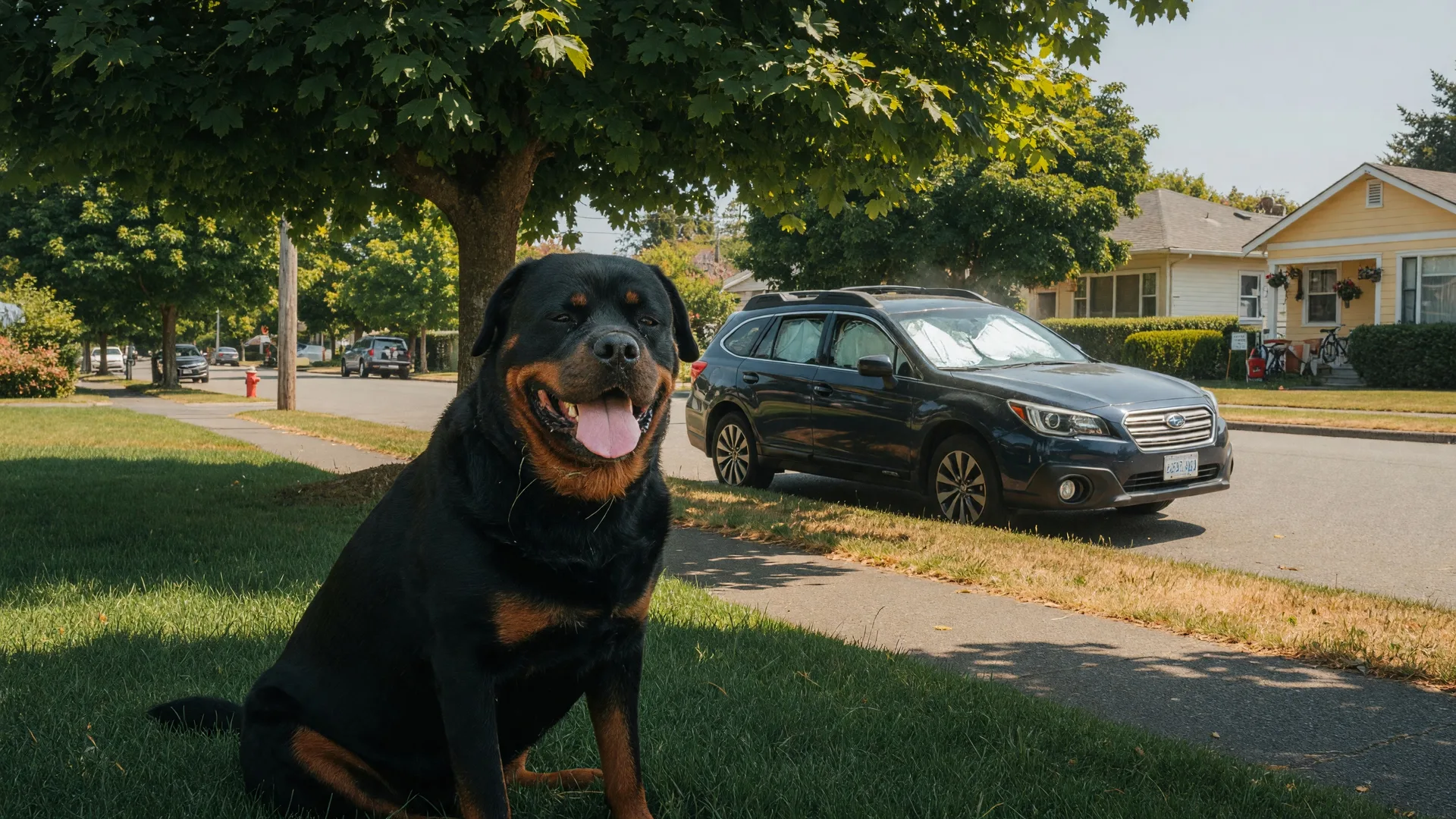
Ziggy loves going for car rides the way most dogs love dinner time: with absolute, uncontainable joy. The moment he hears jingling keys, our 100-pound Rottweiler is at the door, tail wagging at a frequency that could power a small generator. Sahara, our 13-year-old Lab mix, is more selective. She joins us for the scenic drives to Elk Lake or Island View Beach, but she curls up on the back seat and naps through most of it. Both of them trust us completely to keep them safe in the car. And that trust is what we think about every time the temperature climbs above 20 degrees.
Summer in Greater Victoria is stunning, and the car is how we get our dogs to the best trails, beaches, and patios. But the car itself is one of the most dangerous places a dog can be when the sun is out. Here is what every dog owner in Greater Victoria needs to know about car safety in summer.
The Hard Truth: Never Leave Your Dog in a Parked Car
This is not a "depends on the circumstances" kind of rule. It is never safe to leave your dog alone in a parked car on a warm day, end of discussion. The numbers do not leave any room for negotiation. On a 21-degree Celsius day, the temperature inside a parked car can reach 38 degrees in just 10 minutes. On a 30-degree day, that same car hits 50 degrees inside under 10 minutes. Cracking the windows makes almost no difference. Parking in the shade makes almost no difference. The greenhouse effect turns every car into an oven, and your dog cannot sweat their way out of it.
Dogs cool themselves primarily through panting, and when the air around them is hot and humid, panting stops working. Heatstroke sets in fast. A dog with a body temperature above 41 degrees Celsius is in medical crisis. Organ damage begins within minutes. Death follows quickly without emergency veterinary intervention.
The Temperature Reality Check
- 21 degrees outside = 38 degrees inside the car in 10 minutes, 47 degrees in 20 minutes.
- 27 degrees outside = 43 degrees inside the car in 10 minutes, 51 degrees in 20 minutes.
- 32 degrees outside = 50 degrees inside the car in 10 minutes, 57 degrees in 20 minutes.
- Cracking the windows reduces interior temperature by only about 2 to 3 degrees. It does not make the car safe.
What BC Law Says
Leaving a dog in a parked car without adequate ventilation and protection from extreme temperatures is illegal under the BC Prevention of Cruelty to Animals Act. This is not a municipal bylaw with a small fine, it is provincial law with serious consequences. The penalties are among the toughest in Canada: fines up to $75,000, up to 2 years in prison, and a prohibition from owning animals. BC takes this seriously because the risk is so high.
In May 2026, a Coquitlam woman was fined $500 for leaving two dogs in a hot parked car. The BC SPCA receives hundreds of calls every summer about dogs in hot cars across the province. The City of Victoria's Animal Responsibility Bylaw also covers general animal welfare obligations, but the provincial act is the hammer that falls when someone leaves their dog in a car on a summer day.
If you see a dog in a parked car on a warm day, here is what to do: call the BC SPCA Animal Cruel line at 1-855-622-7722 or your local RCMP. Only RCMP officers, local police, and BC SPCA Special Provincial Constables have the legal authority to enter a locked vehicle to rescue a distressed animal. Members of the public who break a window risk legal liability, so let the authorities make that call unless the animal is in obvious, immediate, life-threatening danger and help is not arriving fast enough.
Window Safety: What Goes for Kids Goes for Dogs
When we drive with Ziggy and Sahara, the windows go down just enough for airflow, not enough for either of them to stick their head out. And we mean really not enough. Every summer, we see dogs on the Pat Bay Highway with their whole head hanging out the window, ears flapping in the wind, looking thrilled. It looks great. It is not safe.
The risks are real: flying debris, insects striking the eyes or nose, and the possibility of your dog jumping or falling out of the window, especially if the car turns suddenly or brakes hard. Eye injuries from wind and debris are common enough that veterinary ophthalmologists see them every summer. A piece of gravel kicked up by the car ahead can blind a dog permanently.
The safer approach is to roll the window up high enough that your dog can only get their nose out for a sniff, not their whole head. Better yet, use a window guard or mesh screen that lets air flow through while keeping your dog safely inside the vehicle. We use mesh window shades on our back windows that block UV rays and keep Ziggy and Sahara from trying to stick their heads out at all.
Restraining Your Dog in the Car
An unsecured dog in a moving car is a projectile in a collision. Even a sudden stop at 40 km/h can send a 100-pound Rottweiler flying forward with enough force to injure the dog, the humans in the front seat, or both. In BC, there is no specific law requiring dogs to be restrained in vehicles, but the Motor Vehicle Act lets officers ticket drivers for distracted driving if an unsecured dog is moving around the cabin. More importantly, it is just common sense.
Dog Restraint Options, Ranked by Safety
- Crash-tested crate secured in the cargo area. The safest option. A Variocage, Gunner Kennel, or Ruffwear crate that is bolted down or secured with ratchet straps gives your dog a protected space in a collision. For SUVs and hatchbacks, this is the gold standard.
- Dog seat belt harness. A harness that clips into the seat belt buckle. Look for crash-tested brands like Ruffwear Load Up, Kurgo Tru-Fit, or Sleepypod Clickit. Never attach a seat belt to a collar, a neck injury in a crash is almost always fatal.
- Travel barrier or pet hammock. A mesh barrier between the cargo area and the back seat prevents your dog from climbing into the front, but does not restrain them in a collision. Best used together with a crate or harness.
- Pet booster seat. Good for small dogs, gives them a elevated, secured position in the back seat with a tether that clips to their harness.
We use a collapsible mesh barrier in our car to keep Ziggy in the cargo area of our SUV, combined with a padded mat and a crash-tested crate for longer highway trips. It took some trial and error to find a setup he was comfortable with, but now he settles right in as soon as he sees the crate go in.
Summer Road Trip Prep in Greater Victoria
Having a dog changes how you road trip, and summer in Victoria is the perfect time to explore Vancouver Island with your pup. Heading to Sooke for a beach day, driving up to Cathedral Grove, or just hitting the Galloping Goose for a weekend adventure? Here is what we pack for every summer drive with the dogs.
The Happy Homes Team Summer Car Kit
- Fresh water and collapsible bowl. We carry a 4-litre jug of tap water and a silicone collapsible bowl. Dogs should never drink from streams, lakes, or public water fountains you cannot verify.
- Cooling mat or wet towel. A pressure-activated cooling mat (no refrigeration needed) or a damp towel for your dog to lie on during rest stops. We use a Green Pet Shop cooling mat that activates under your dog's weight.
- Portable USB fan. A small clip-on fan that runs off a USB power bank keeps air moving over your dog at rest stops. We clip one to the edge of the crate on warm days.
- Towels and a change of clothes for you. Your dog will find mud, water, or sand. Pack two towels, one for the initial wipe and one for drying off before getting back in the car.
- Emergency vet list. A printed card with the addresses and phone numbers of emergency vet clinics along your route. For Greater Victoria, the 24-hour Animal Emergency Clinic of Victoria is at 120 Benvenuto Avenue, phone (250) 475-1281.
- Dog licence tag and ID. Your dog must wear their municipal licence tag at all times in Greater Victoria. Make sure their microchip information is up to date and their collar has a tag with your current phone number.
- Poop bags and a spare leash. Always carry more bags than you think you need, and a spare leash in case your primary one breaks or gets wet.
- First aid kit. A basic dog first aid kit with sterile bandages, antiseptic wipes, tweezers, and a tick removal tool. Add a muzzle if your dog is nervous about being handled in pain.
Never. Not for a Quick Errand. Not for Five Minutes.
We cannot say this strongly enough. That "I will just run in for a minute" mindset is how dogs die in parked cars. A "quick errand" at a grocery store in Victoria takes longer than you think, especially in summer when lines are long. We have been there, standing in line at Red Barn Market, thinking about Ziggy waiting in the car. The answer is the same every time: do not do it. If you need to run errands with your dog, pick places with dog-friendly policies. Leave your dog at home in the air conditioning. Find a friend to sit with your dog in the car while you run in. But never, under any circumstances, leave your dog alone in a parked car in warm weather.
The same goes for the car running with the air conditioning on. AC can fail. The car can stall. A parked, running car can be stolen with your dog inside. If you absolutely must leave your dog in the car with the AC running, you must stay with the car or have someone you trust sitting in it the entire time. No exceptions.
Ferries and Longer Trips
If you are heading off Vancouver Island with your dog on BC Ferries, plan ahead. Dogs are allowed on the car deck and in designated pet areas on the upper decks, but during summer sailings, the car deck gets hot and stuffy. Book a pet-friendly kennel spot if your dog is nervous or if it is a hot day. Bring water to leave in the car for the sailing. And if you are walking your dog on the upper deck pet area, bring a towel because the deck can get hot enough to burn paws in direct sun. The pet deck on BC Ferries is shaded on most vessels, but it is worth checking with the crew when you board.
For longer road trips around Vancouver Island, plan your route around dog-friendly rest stops. The Malahat summit has a pullout with shade. Kinsol Trestle has a lovely forest walk. Cowichan Bay has a waterfront path. Never push through without stopping, your dog needs water, shade, and a break from the car just as much as you do, probably more.
What About Truck Beds?
Dogs riding in pickup truck beds is a common sight in Victoria, especially around the Westshore. It is also dangerous. In a collision, a dog in an open truck bed can be thrown out or crushed by cargo. In some BC municipalities, it is restricted or requires a secure crate or tether. The safest option is to carry your dog inside the cab in a secured crate or harness. If you must use a truck bed, use a crash-tested crate that is bolted to the bed, never a loose tether.
The Bottom Line
Car safety for dogs in Greater Victoria comes down to a single unbreakable rule: never leave your dog alone in a parked car. On top of that, secure your dog properly while driving, keep windows at a safe height, pack for your dog's comfort on road trips, and know who to call if you see a dog in a hot car. The car is how we get our dogs to the best parts of Victoria. But it can also be the most dangerous place for them if we are not careful.
We drive Ziggy and Sahara to trails, beaches, and patios almost every day in summer. They love the car because the car always takes them somewhere good. That is exactly how it should be. And it is on us as their humans to make sure every ride home is as safe as the ride out.
Stay safe out there, Victoria.