
What Should Be in a Dog First Aid Kit for Victoria, BC?
By Anna Hakim & Perry Fanthorpe, Happy Homes Team at eXp Realty
Your Victoria dog first aid kit at a glance:
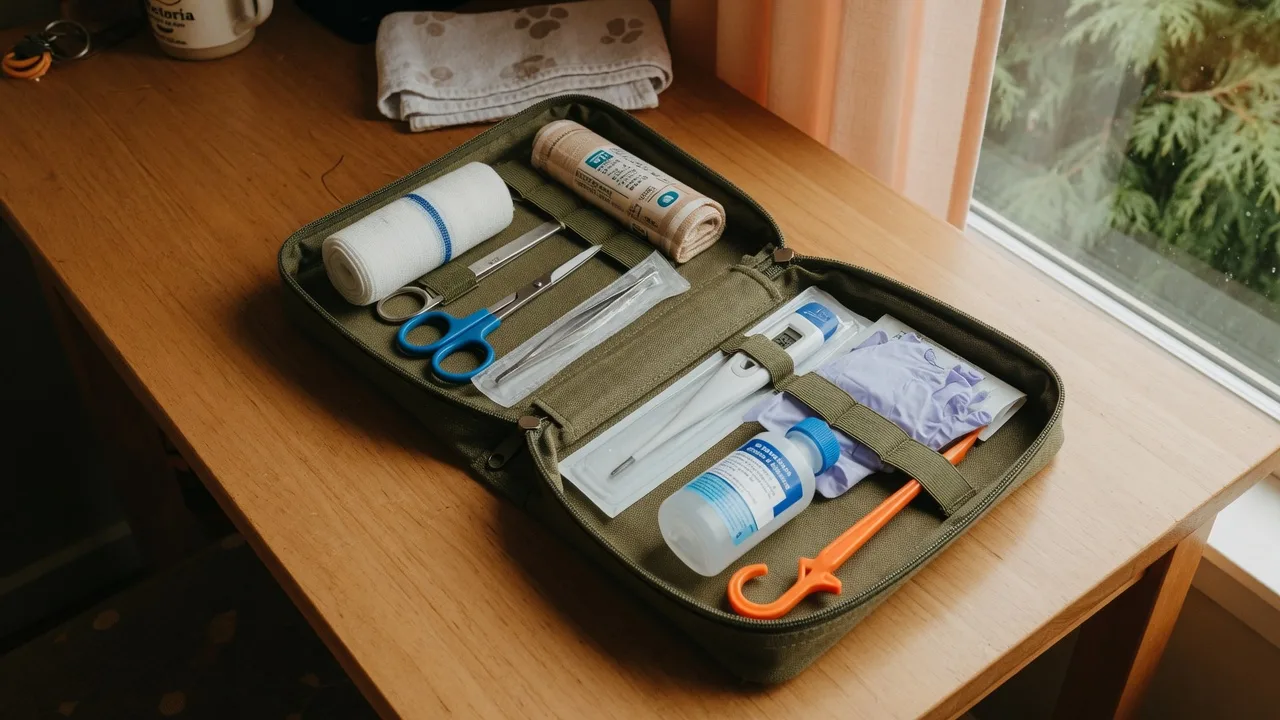
A dog first aid kit is the difference between acting calmly and fumbling when something goes wrong. The essentials are the same no matter where you live, but a Victoria kit has two local additions: a tick remover for our trails, and the two 24-hour emergency vet numbers saved before you need them.
I built our home kit after Sahara cut a pad on a beach walk and I had nothing but paper towel and regret. Since then we keep a full kit at the house and a small one in the car, because most dog emergencies happen away from the kitchen. Here is exactly what goes inside and why.
What wound care should a dog first aid kit include?
Start with the bandaging basics, because they are what you will use most. Gauze rolls and non-stick sterile pads sit against a wound so nothing sticks to it. Self-adhering bandage wrap (the kind that grips itself, not fur) holds it in place without glue or tape sticking to hair. Medical tape and blunt-tipped scissors round out the set.
Blunt-tipped scissors matter for one reason: you may have to cut bandage or matted fur away from a wound, and a pointed blade near an anxious dog's leg is how you make things worse. Keep the scissors in the kit and nowhere else.
What tools should a dog first aid kit include?
Beyond wound care you want tools. Tweezers and a tick remover for the ticks we actually have on Greater Victoria trails. A digital thermometer so you can tell a real fever from a warm day. A muzzle, because even the gentlest dog may bite when it is in pain, and a muzzle is safer than holding a nose.
Add non-medicated sterile saline for flushing eyes and wounds, an antiseptic like chlorhexidine for cleaning a cut, styptic powder to stop a nail bleed, disposable gloves, an instant cold pack, and a needleless syringe for dosing liquid medicine. A towel and an old bandana double up as a sling, a restraint, or an improvised muzzle.
Should I keep medications in the kit?
Keep a couple, but only the ones you are trained to use. Diphenhydramine, the plain Benadryl without decongestant, is useful for allergic reactions, and glucose syrup helps low blood sugar. Both need a vet-approved dose for your dog's weight, so write the dose on the bottle and confirm it at your next checkup.
Skip anything you are not sure about. The kit is for stabilizing and buying time, not for DIY medicine. When in doubt, call the emergency vet first and let them talk you through it.
Where do I buy the kit items in Victoria?
Most items come from a pharmacy and a pet supply store. Regular pharmacies carry gauze, tape, saline, and scissors. Bosley's in Langford or Saanich stocks dog-specific wound care, tick removers, and styptic powder. Paws On Cook in Cook Street Village and The Dog Dish & Friends in Fairfield carry the dog-specific extras too. You do not need one perfect store; you need the kit assembled and kept current.
What are the emergency vet numbers in Greater Victoria?
Greater Victoria has two 24-hour emergency veterinary hospitals. VCA Canada Central Victoria Veterinary Hospital is near Bay Street and Dock Street, and its phone number is (250) 475-2495. WAVES (West Coast Animal Veterinary Emergency Specialty Hospital) is in Langford, which makes it the faster option if you live on the West Shore, and its number is (778) 432-4322.
Save both before you need them, and write them on the kit itself and the fridge. In a real emergency you will not want to search your phone with a shaking hand. Know your dog's current weight too, because emergency dosing is calculated by weight.
Where should I keep the kit in the home?
Keep the full kit somewhere you can reach fast and remember, not buried in a closet. A bathroom cabinet or a pantry shelf near the door works. Keep the compact car kit in the trunk or under a seat so it is there for beach and trail days. Check once or twice a year that nothing has expired and the numbers are still current.
This is also a reason the layout of your home and neighbourhood matters more than most people expect. When we help dog owners find a place, we always ask where the nearest emergency vet is and how quickly you can get there from your front door. In a house with a dog, that drive time is a real feature, not a footnote.
One more thing: a kit you cannot find in the dark is a box of good intentions. Put it somewhere obvious, tell everyone in the house where it is, and run through the emergency numbers once. You will almost certainly never use it, and if you do, you will be glad you already prepared it.
If you are choosing a new home with your dog in mind and want to know how close it sits to an emergency vet, a good off-leash park, and a reliable pet store, we can help you think it through. Start with our dog-friendly neighbourhood guides or book a time to talk.