
How Do I Keep My Dog Safe on Halloween in Victoria, BC?
By Anna Hakim & Perry Fanthorpe, Happy Homes Team at eXp Realty
Halloween Safety for Dogs in Victoria, BC:
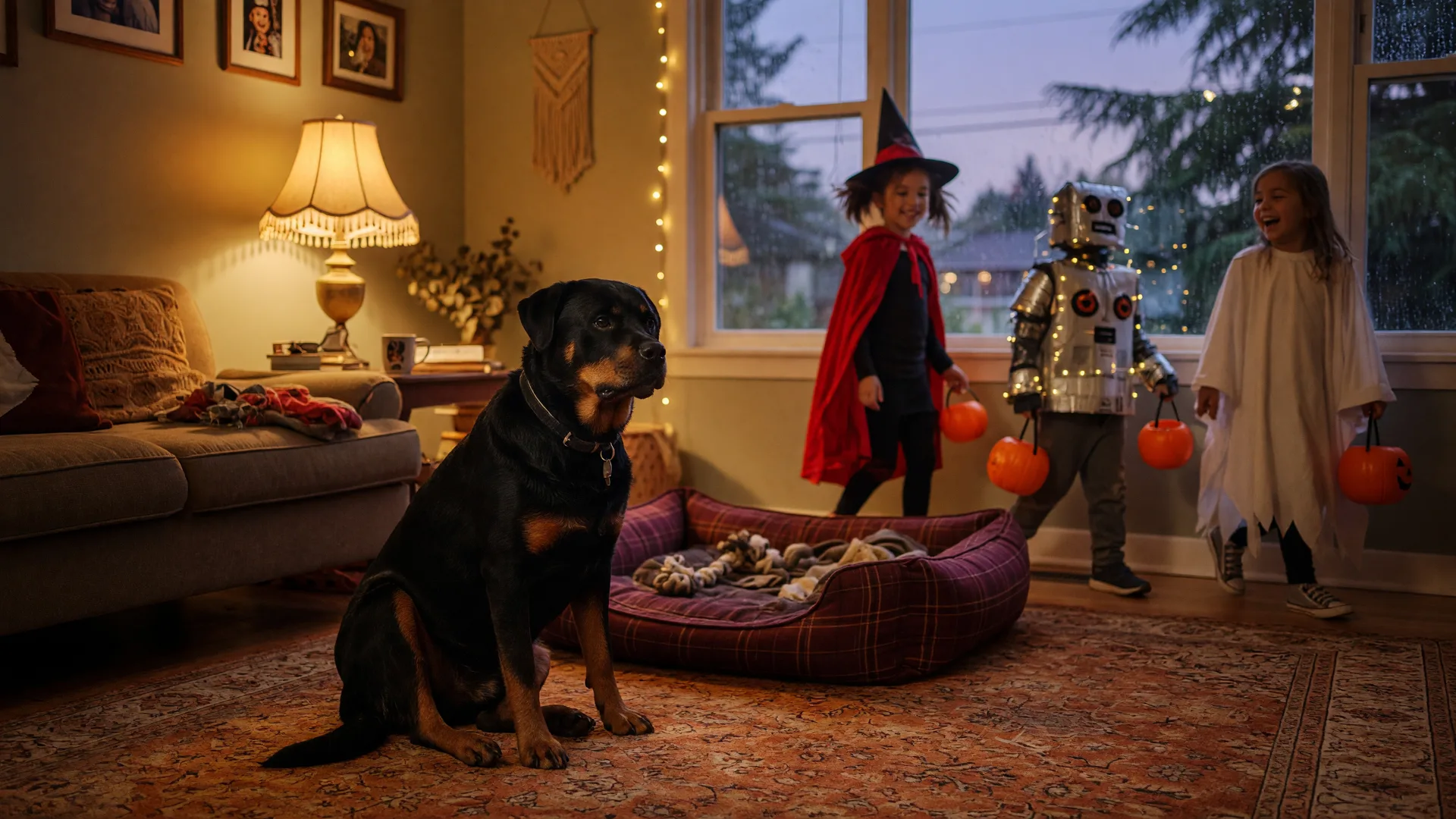
Halloween is one of the most dangerous nights of the year for dogs. Emergency vet visits spike across North America on October 31, and Victoria is no exception. Between the chocolate, the wrappers, the constant doorbell ringing, strangers in masks, and the sugar-free gum that can kill a dog in under an hour, Halloween is a minefield for dog owners who do not plan ahead.
We have spent every Halloween with Ziggy and Sahara in Victoria for years now, and we have learned the hard way what works. Here is exactly how to get your dog through a safe, low-stress Halloween in Greater Victoria.
When Does Trick-or-Treating Happen in Victoria?
Victoria does not have an official city-wide trick-or-treat window, but neighbourhood norms are consistent. Most activity happens between 5:00 and 9:00 PM on October 31, with the heaviest foot traffic between 6:00 and 8:00 PM. Younger children tend to start earlier, around 5:00 PM.
A few organized events have set hours that are worth knowing about:
- Oak Bay Village Trick-or-Treat on the Avenue: 2:00 to 5:00 PM. A daytime option if you want to avoid evening chaos.
- Westshore Town Centre Mall trick-or-treating: 3:30 to 5:00 PM. Indoor, controlled environment.
- Langford Station Treat Street: 5:30 to 8:30 PM. A community street event with businesses handing out candy.
Knowing the schedule lets you plan your dog's evening. If you live in a high-traffic trick-or-treating neighbourhood like Fairfield, James Bay, or Oak Bay, the doorbell will ring steadily from 6:00 to 8:00 PM. Plan for it.
Which Halloween Candies Are Toxic to Dogs?
This is the biggest risk, and it is entirely preventable. The three things to watch for are chocolate, xylitol, and raisins.
Halloween Candy Toxicity: What to Watch For
- Chocolate (especially dark and baker's chocolate). Contains theobromine and caffeine, which dogs metabolize slowly. Dark chocolate is the most dangerous. Milk chocolate is less toxic but still a problem in large amounts. Symptoms include vomiting, diarrhea, rapid breathing, increased heart rate, and seizures.
- Xylitol (artificial sweetener). Found in sugar-free gum, sugar-free candy, some peanut butters, and breath mints. Xylitol causes a rapid drop in blood sugar and can lead to liver failure. Symptoms appear within 30 minutes and include vomiting, weakness, staggering, and seizures. A single piece of xylitol gum can kill a small dog.
- Raisins and grapes. Some trail mix and Halloween snack packs contain raisins. Even small amounts can cause kidney failure in dogs. The mechanism is not fully understood, but the risk is real.
- Wrappers and packaging. Dogs will eat candy wrappers too. Foil, plastic, and cellophane can cause intestinal blockages that require emergency surgery.
Keep all Halloween candy in a sealed container on a high shelf or in a locked cupboard. Remind kids not to leave their stash on the floor or under the bed. When you are handing out candy, set up a bowl on the front step rather than opening the door each time, which keeps your dog away from the action.
What Do I Do If My Dog Eats Something Toxic?
Do not wait for symptoms to appear. If you know or suspect your dog ate chocolate, xylitol, raisins, or any candy wrapper, call your vet immediately. Time matters.
Here are the numbers to save in your phone before Halloween:
- Pet Poison Helpline: 1-855-764-7661. There is a consultation fee, typically around $89 per incident, but they are available 24/7 and staffed by veterinary toxicologists.
- ASPCA Animal Poison Control Center: 1-888-426-4435. Another 24/7 option, with a consultation fee.
- Central Victoria Veterinary Hospital: (250) 475-2495. 24-hour emergency vet on West Saanich Road.
- VI Veterinary Emergency Clinic: (250) 383-5381. 24-hour emergency vet on Burnside Road West.
For a full breakdown of emergency vet options, see our Dog Emergency Vet Guide for Victoria.
Should I Put My Dog in a Halloween Costume?
This one is simple: if your dog does not like wearing clothes, do not force a costume. Signs of stress include tucked tail, pinned ears, whale eye (showing the whites of their eyes), panting, and trying to rub the costume off. If you see any of these, take the costume off.
If your dog is fine with costumes, keep it simple. Avoid masks or headpieces that block vision or breathing. Avoid anything with dangling parts that could be chewed off and swallowed. A bandana in a Halloween print is often as festive as your dog needs to be, and it does not restrict movement or cause stress. Sahara has worn a pumpkin bandana every Halloween for years, and she acts like nothing is different. That is the bar your costume should meet.
How Do I Handle the Doorbell and Constant Visitors?
The doorbell is often harder on dogs than the candy. For a reactive or anxious dog, every ring is a new stress spike. The easiest solution is to set up a candy bowl on your front step or porch and skip the doorbell entirely. Tape a sign to your door that says "Please help yourself. Sleeping dog inside." Most neighbours will respect it.
If you do want to answer the door, here is a better approach:
- Set your dog up in a quiet room at the back of the house before trick-or-treaters start arriving.
- Close the curtains or blinds in that room to block flashing lights and shadows.
- Put on white noise, a fan, or calm music to mask the doorbell and voices.
- Give them a high-value chew or a frozen Kong stuffed with peanut butter (check the label for xylitol!) or yogurt.
- Check on them between waves of visitors. If they are calm, stay the course. If they are stressed, adjust for next year.
This is the same safe-space strategy we use for fireworks, and it works for the same reason: predictability, sensory dampening, and a positive association. If this sounds familiar, check our Fireworks Noise Anxiety Guide for a deeper breakdown of the safe room setup.
What About Walking My Dog on Halloween Night?
If you can, walk your dog before 5:00 PM on October 31. After that, the streets fill with children in masks and costumes, and even a well-socialized dog can be spooked by a person in a full-face mask or a motion-activated decoration that suddenly screams.
If you have to walk your dog during trick-or-treat hours, keep them on a short leash, bring a high-visibility collar or LED light, and stay on well-lit streets. Avoid streets with heavy foot traffic. If your dog shows any sign of stress, head home.
What If My Dog Gets Spooked and Runs Off?
Halloween is the most common night for dogs to bolt. A loud noise, a costumed figure, or a slamming door can trigger a flight response. Make sure your dog's collar has their CRD licence tag and your phone number, and confirm that their microchip registration is current. For a full action plan, read our Lost Dog in Greater Victoria Guide.
Why Halloween Awareness Matters for Your Home and Neighbourhood
Halloween is one night a year, but the way your street handles it says something about your neighbourhood. In walkable neighbourhoods like Fairfield, James Bay, and Oak Bay, Halloween is a block party with heavy foot traffic and lots of families. If your dog is sensitive to noise and strangers at the door, a quieter street on the outskirts or in Saanich might be a better fit for your daily life.
When we help dog owners find a home, we ask about the little things: how quiet is the street, how many neighbours walk their dogs, how the neighbourhood handles holidays. Those details do not show up in a listing, but they shape your quality of life with a dog. Book a coffee chat with the Happy Homes Team and tell us what you are looking for.