
Heatstroke in Dogs: Recognition, First Aid & When to Rush to the Vet in Victoria
By Anna Hakim & Perry Fanthorpe, Happy Homes Team, eXp Realty | AI Certified Agents
Heatstroke in Dogs, Greater Victoria:
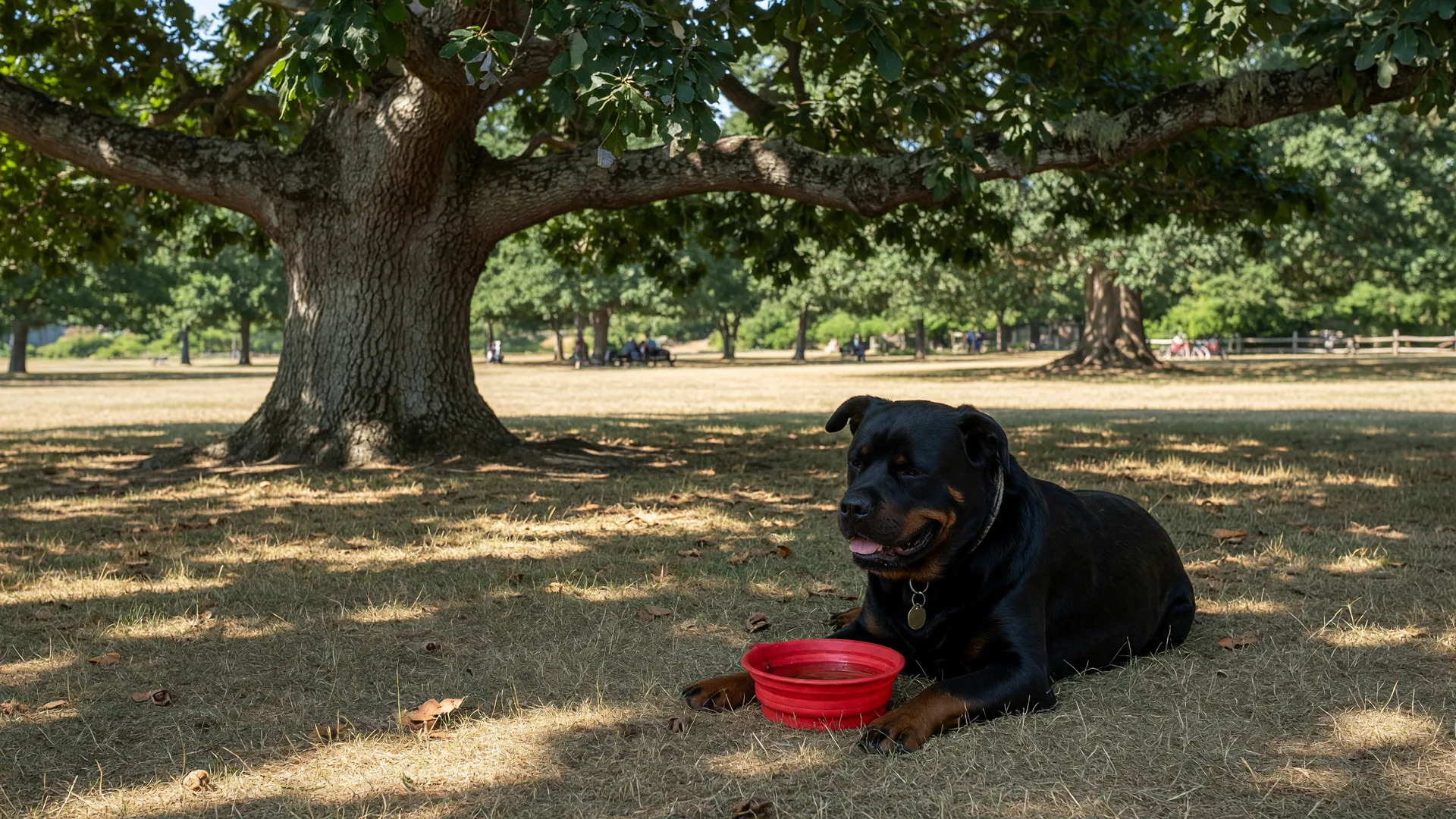
Last summer we saw a woman at Elk Lake whose golden retriever collapsed after fifteen minutes of fetch in the heat. The dog was panting so hard it could barely stand. The woman was crying, trying to pour bottled water over the dog but aiming at its head and missing its body. A group of strangers helped cool the dog down, someone called the vet, and the golden eventually made it. But watching that scene unfold on a beautiful afternoon at one of Victoria's most popular dog spots hit us hard, because it could have been any of us. Heatstroke does not care how much you love your dog. It cares about core temperature, and when that number passes 40 degrees Celsius, the clock starts ticking in minutes, not hours.
This guide is about one thing: knowing exactly what heatstroke looks like, exactly what to do when you see it, and exactly where to go in Victoria. Not general advice about walking in the morning. Not hydration tips. The emergency playbook, written for anyone walking a dog through a Victoria summer.
What Heatstroke Actually Is
Heatstroke (hyperthermia) is not a dog getting too hot. It is a medical emergency where a dog's core body temperature rises above 40 degrees Celsius (104 degrees Fahrenheit) and their cooling systems shut down. Dogs cool themselves primarily through panting and limited sweat glands in their paw pads. That system works well in normal conditions, but when the air is hot enough, the humidity is high enough, or the dog is exerting themselves hard enough, panting cannot keep up. The temperature climbs, and once it passes 41 degrees Celsius (106 degrees Fahrenheit), internal organs begin to cook. Proteins denature. Cells die. The cascade of organ failure can kill a dog within 15 to 30 minutes of the first warning signs.
Heat stress is the milder stage that comes before heatstroke. A dog with heat stress is panting hard, may seem tired, and needs rest, water, and cooling. Heatstroke is what happens when heat stress is ignored or when it comes on so fast that there is no time for the mild stage. In Victoria, with our moderate summers and misleadingly cool ocean breezes, it is easy to miss the transition from heat stress to heatstroke until it is too late.
The Temperature Danger Scale for Dogs
- 37.8 to 39.2 degrees Celsius (100 to 102.5 degrees Fahrenheit): Normal dog body temperature. Higher than human normal (37 degrees Celsius) so do not be alarmed by a warm-feeling dog on a normal day.
- 39.5 to 40 degrees Celsius (103 to 104 degrees Fahrenheit): Heat stress zone. Your dog is working hard to cool down. Rest, shade, and water are needed immediately. Do not continue the walk.
- 40 to 41 degrees Celsius (104 to 106 degrees Fahrenheit): Heatstroke onset. Emergency cooling and veterinary attention required. This is the danger zone.
- Above 41 degrees Celsius (106 degrees Fahrenheit): Critical emergency. Organ damage begins. This is life-threatening. Cool the dog aggressively during transport to the vet.
How to Recognize Heatstroke: Beyond Just Heavy Panting
Every dog pants when it is warm. The trick is knowing the difference between normal summer panting and the kind of panting that means your dog is in trouble. Here is what we look for and what the vets want you to recognize:
The Six Warning Signs That Demand Immediate Action
- Excessive, forceful panting that does not ease with rest. Normal panting slows down when a dog stops moving and lies in the shade. Heatstroke panting does not slow. It is loud, laboured, and looks like the dog cannot catch its breath no matter what. The tongue may be hanging far out and very wide.
- Thick, ropy, stringy drool. Normal drool from a dog anticipating a treat or the beach is watery. Heatstroke drool is thick and ropes down from the mouth. It is a sign of dehydration and the body redirecting fluid away from saliva production.
- Bright red or dark red gums. Lift your dog's lip. Normal gums are a healthy pink. Bright red gums mean blood vessels are dilated from heat overload. Dark red, purple, or blue gums mean oxygen levels are dropping, which is a critical emergency.
- Stumbling, wobbling, or disorientation. A dog who walks like they are drunk, bumps into things, or seems confused about where they are is experiencing neurological effects of rising brain temperature. This is one of the most alarming signs because it means the heat is affecting the central nervous system.
- Vomiting or diarrhoea, especially with blood. The digestive tract is extremely sensitive to temperature increase. Vomiting is the body trying to purge, but in heatstroke it can be a sign of internal organ distress. Blood indicates damage to the intestinal lining.
- Collapse, seizures, or loss of consciousness. If your dog goes down and cannot get up, or starts having a seizure, this is a full medical crisis. Keep cooling and get to a vet immediately.
You do not need to see all six. Two or three of these signs together, especially excessive panting plus bright red gums plus stumbling, means your dog is in heatstroke territory. Do not wait to see if they improve on their own. Start cooling and decide on transport.
The Emergency First Aid Protocol: Cool First, Transport Second
The Royal Veterinary College recommends a simple guiding principle: cool first, transport second. Do not jump straight in the car without starting the cooling process. Every minute you spend cooling your dog increases their chance of survival. Here is the exact sequence of steps:
Step-by-Step Emergency Protocol
- 1 Move your dog to shade or air conditioning immediately. Get them out of the sun. Under a tree, inside a car with the AC running, into a shaded doorway, anything. Do this before you do anything else.
- 2 Pour cool water over the body. Tap temperature water, not ice water. Focus on the neck, armpits, and groin where major blood vessels run close to the skin. Do not pour water over the head or mouth, you do not want your dog to inhale water. Do not use ice water, it causes blood vessels to constrict and traps heat inside the body.
- 3 Maximise evaporative cooling with airflow. If you have a fan, point it at your wet dog. If you are outside, position them in a breeze. The combination of wet fur plus airflow is the most effective cooling method. A wet towel placed on the body works but must be replaced every two minutes as it warms up, otherwise it insulates the heat in.
- 4 Offer small amounts of cool water to drink. Do not let your dog gulp, they may vomit. Small sips every few minutes. Do not force the water, if they do not want to drink they may be too far gone to swallow safely.
- 5 Continue cooling during transport. Keep a wet towel on the dog's body (replace it if it warms up). Keep the car air conditioning on. If you are alone, it is better to drive with one hand and keep a cool wet towel on the dog with the other than to delay departure.
- 6 Go to the vet even if your dog seems better. Internal organ damage from heatstroke can take 12 to 48 hours to become apparent. A dog who seems fine after cooling may still have kidney failure, liver damage, or clotting disorders developing internally. Every heatstroke case needs veterinary evaluation.
When to Rush to the Vet: Your Victoria Emergency Plan
If your dog has collapsed, seized, lost consciousness, or is stumbling and cannot stand up, do not wait. Start cooling in place for five minutes, then drive. If your dog is panting excessively with bright red gums and thick drool but is still standing and walking, start cooling and call your vet for guidance. They may tell you to come in immediately regardless.
Greater Victoria has two 24-hour emergency veterinary hospitals. Save both numbers in your phone right now:
Central Victoria Veterinary Hospital
760 Roderick Street, Victoria
(250) 475-2495Open 24 hours, 365 days. Full emergency and critical care.
WAVES Emergency Hospital
947 Langford Parkway, Victoria
(778) 432-4322Open 24 hours. Specialty services including internal medicine and surgery.
Call ahead if you can. Tell them you are coming in with a suspected heatstroke case so they can prepare. If you cannot call because you are driving and cooling at the same time, just go. They will take you when you arrive.
Which Dogs Are Most at Risk in Victoria?
Any dog can get heatstroke, but some are at higher risk. Know whether your dog falls into one of these categories and take extra precautions:
- Brachycephalic (flat-faced) breeds: Bulldogs, French Bulldogs, Pugs, Boxers, Shih Tzus, and Pekingese have compromised airways that make panting much less effective. They can overheat in temperatures that would be merely warm for a longer-nosed breed. If you own a flat-faced dog in Victoria, heat safety is a year-round concern, not just summer.
- Dark-coated and thick-coated breeds: Rottweilers, Labrador Retrievers, German Shepherds, Huskies, and Newfoundlands absorb heat faster than light-coloured dogs. Ziggy's black coat can be noticeably hot to the touch after ten minutes in the sun, even with an ocean breeze.
- Senior dogs (7 years and older): Sahara at 13 has reduced cardiovascular efficiency, arthritis that makes her work harder to walk, and a less effective cooling system. Senior dogs overheat faster and recover slower.
- Overweight dogs: Extra body fat acts as insulation, trapping heat inside and making it harder to cool down. A fit dog has a significant advantage in hot weather.
- Dogs with pre-existing health conditions: Heart disease, respiratory conditions, kidney disease, and a history of heatstroke all increase risk. If your dog takes daily medication, ask your vet whether it affects their heat tolerance.
Common Heatstroke Scenarios in Greater Victoria
Heatstroke does not always happen on a scorching day. Some of the most dangerous scenarios in Victoria involve conditions that feel harmless:
- The warm evening fetch session. The sun is low, the breeze is cool, and you think it is fine. But the dog has been running full speed for 20 minutes, and their internal temperature has been climbing the whole time. This is how heatstroke catches thoughtful owners off guard.
- The shaded trail that is actually humid. Dense forest sections of the Galloping Goose Trail and Cuthbert Holmes Park stay cooler than pavement, but they also have higher humidity under the canopy. Dogs panting in humid air have a harder time cooling because evaporation happens slower. A long hike on a humid trail can push a dog's temperature up gradually over an hour without the owner noticing.
- The beach day where the dog refuses to stop. Some dogs, like Ziggy, will chase a ball into the water until they physically cannot stand. The cold ocean water masks how hot their core is getting because their skin feels cool. But their muscles are still generating heat from exertion, and when they finally stop, the core temperature can spike.
- The hot car. A parked car interior can reach 50 degrees Celsius within 10 minutes on a 25-degree day, even with the windows cracked. This is the most preventable cause of heatstroke death. Never leave your dog in the car.
What to Keep in Your Summer Walk Kit
We carry a small bag on every summer walk that could double as an emergency cooling kit. Here is what is in it:
- One litre of water minimum. For drinking and for emergency cooling. On a long walk or beach day we carry two litres.
- Collapsible water bowl. Light, compact, and essential for offering water without your dog drinking from a lake or puddle.
- A small towel or bandana. Get it wet, wrap it around your dog's neck for cooling. Evaporation from a wet neck wrap works fast.
- A charged phone with vet numbers saved. We have Central Victoria Veterinary Hospital and WAVES in our contacts under "Emergency Vet."
Prevention: The Practical Side
Beyond the emergency response, there are straightforward things you can do every day in Victoria to prevent heatstroke from happening in the first place:
- Walk before 8:00 a.m. or after 7:00 p.m. during July and August. The sun is intense even at 10:00 a.m. on a clear Victoria summer morning.
- Know the 7-second pavement test. Place the back of your hand on the pavement for 7 seconds. If it is uncomfortable for you, it is too hot for your dog's paws and the heat radiating upward is also heating their body from below.
- Shorten high-exertion activities. Ziggy gets 10 minutes of fetch instead of 20 on warm days. He does not like it, but he does not know what is good for him.
- Give your dog a cooling mat or damp towel to lie on after walks. A cool surface helps bring core temperature back down faster.
- Use frozen treats. Frozen Kongs, ice cubes (most dogs love crunching them), or frozen berries make a great cooling snack.
The Bottom Line
Heatstroke is the most preventable summer emergency and also one of the fastest-moving. The difference between a close call and a tragedy is often just a few minutes and knowing exactly what to do. Learn the six warning signs. Practise the cool-first protocol in your head so it is automatic. Save the vet numbers in your phone. And if you are ever in doubt, act like it is heatstroke. Being wrong and having a slightly stressed dog for an hour is infinitely better than being right too late.
We spend our summers on the trails and beaches of Greater Victoria with Ziggy and Sahara, and we want every dog owner to enjoy this city as much as we do. The key is knowing what to watch for and what to do when the worst happens. Stay alert out there, Victoria.
🐾