
Late Summer Hot Pavement Safety: A Refresher for August and September
By Anna Hakim & Perry Fanthorpe, Happy Homes Team, eXp Realty | AI Certified Agents
Late Summer Hot Pavement Safety in Greater Victoria (August to September):
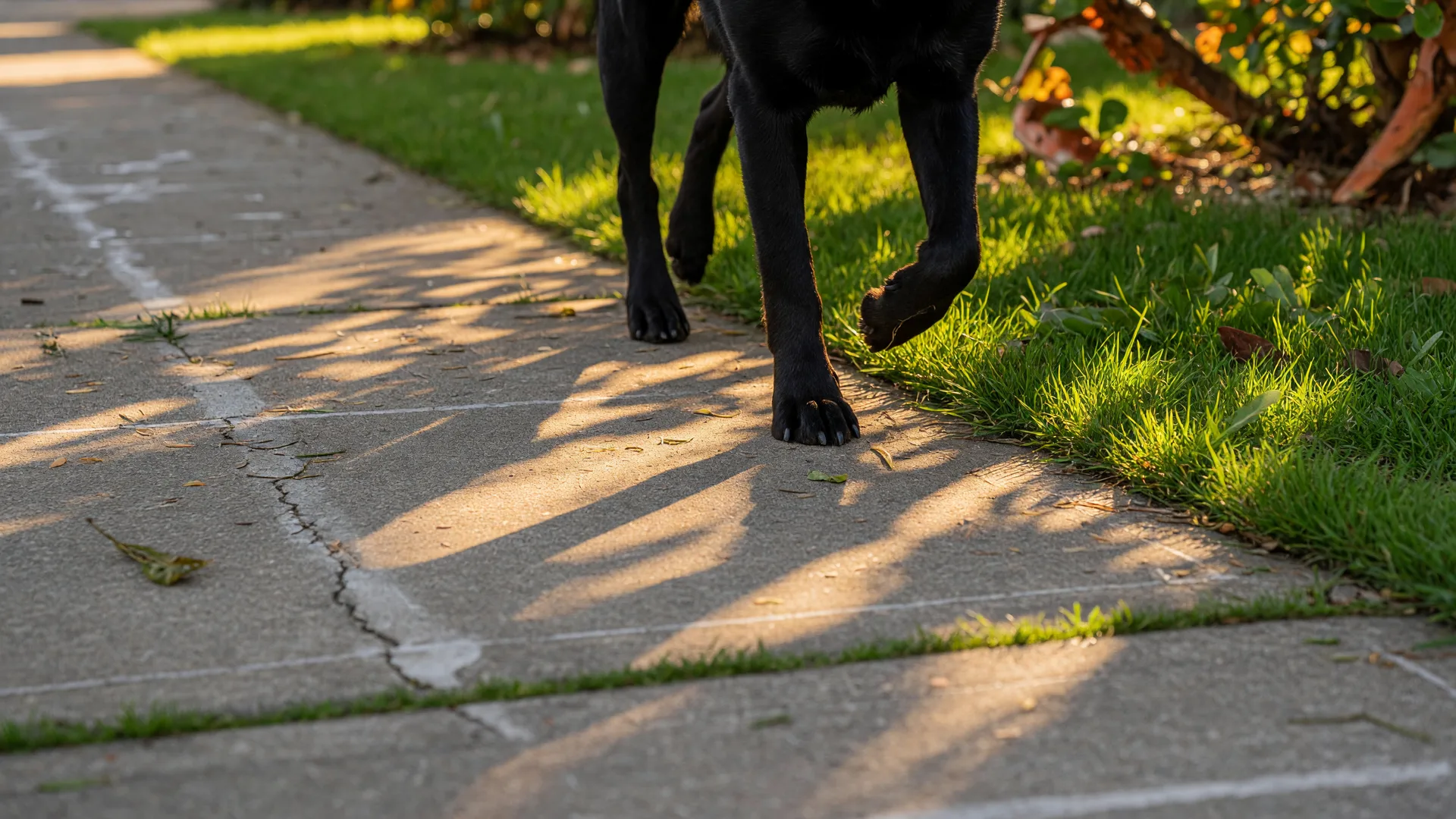
It is late August, and the mornings have turned cooler. The sun sets earlier. The air has that end-of-summer quality that makes you want to linger on every walk. And somewhere in the back of your mind, you might be thinking the hot pavement problem is over. It is not. August and September in Greater Victoria can still produce pavement temperatures that burn a dog's paws in under a minute.
We have been walking Ziggy and Sahara through every summer since they were puppies. Every year, around this time, we see dog owners relaxing their guard. The 7-second hand test gets skipped. The midday walks creep later into the afternoon. The beach parking lot pavement feels cool in the morning, so surely it is fine at 3 PM, right? Wrong. The science has not changed just because the calendar says late August. Asphalt on a sunny September afternoon in Victoria can still hit 50 C, and that is hot enough to cause second-degree burns.
This is a short, practical refresher for the final weeks of summer. Read it, share it with a friend who owns a dog, and keep using the 7-second rule through Labour Day and beyond.
The 7-Second Rule: Still the Simplest Safety Check
The 7-second rule is not a June-only guideline. It applies every single day of the year when the sun is out and pavement is exposed. Here is how it works:
Place the back of your hand flat on the pavement. Hold it there for seven full seconds. If you cannot keep your hand on the surface comfortably for the full seven seconds, it is too hot for your dog to walk on.
That is it. No thermometer needed. No app required. Just your own skin, seven seconds, and good judgment. We use this test at every trailhead parking lot, every sidewalk crossing, and every beach boardwalk before we let Ziggy or Sahara step onto the surface.
On a sunny late-August afternoon in Victoria, exposed asphalt can read 52 to 58 C. That is well above the 48 C threshold where paw pad burns begin. The 7-second rule catches this instantly.
Where Pavement Stays Hot in Late Summer
Not all pavement is created equal. Here is where we find the hottest surfaces even in late August and September:
Late Summer Pavement Hot Spots
The September Heat Wave Risk
Victoria does not stop producing warm weather on August 31. September is one of the most beautiful months on the south coast, and it regularly delivers stretches of 22 to 27 C weather. In fact, some of Victoria's hottest recorded days have occurred in September, when the ocean has warmed through the summer and the inland high-pressure systems stall over the Strait of Juan de Fuca.
Our own tip: Do not let the calendar fool you. A sunny September day with an air temperature of 25 C produces the same asphalt temperature as a sunny June day at 25 C. The pavement does not know what month it is. The 7-second rule applies equally in every month of the year.
Our Late Summer Walking Schedule
With Ziggy and Sahara, we adjust our walking schedule as the season progresses. Here is what our late August and September routine looks like:
- Morning walks before 9 AM. The pavement is cool from the overnight low, and the morning dew settles the dust on forest trails. This is our favourite time of day. The trails at Francis King and Mount Douglas are quiet, the light is golden, and the pavement test always passes.
- Midday: forest trails only. If we walk between 11 AM and 3 PM, we stay on shaded dirt trails. The Galloping Goose is fine on its gravel sections. The Thetis Lake forest trails are shaded enough to keep surface temperatures low. We avoid any route that requires crossing a parking lot or walking on exposed pavement.
- Afternoon walks after 6 PM. By 6 PM, the pavement in most spots has cooled enough for the 7-second test to pass. But we still test every surface. South-facing pavement and dark asphalt parking lots can hold heat well into the evening.
Late Summer Walking Cheat Sheet
| Time of Day | Pavement Risk | Best Surface Choice |
|---|---|---|
| Before 9 AM | Low | Pavement, trails, grass, beach sand all safe |
| 9 AM to 11 AM | Moderate | Shaded trails, grass, wet sand. Test pavement before stepping on. |
| 11 AM to 4 PM | High | Shaded forest trails only. Avoid pavement, sand, parking lots. |
| After 6 PM | Low to Moderate | Most surfaces safe, but test pavement and parking lots first. |
Paw Wax and Booties: Worth Having Handy
By late August, the trails are dusty and the pavement is still warm. A paw wax like Musher's Secret creates a thin barrier on paw pads that helps with both heat and trail grit. We apply it before any walk that involves a trailhead parking lot crossing or a stretch of boardwalk.
Dog booties are the gold standard for hot pavement protection. If your dog tolerates them, they eliminate the risk entirely. Ziggy has learned to accept his booties with a resigned sigh. Sahara, at 13, gets the bootie-free treatment and we plan our routes around her older paws. If your dog is new to booties, introduce them at home with plenty of treats and a few short sessions before relying on them for a real walk.
What About Beach Sand in September?
Dry beach sand can get hot enough to burn paws in late summer. The top layer of sand on a sunny September afternoon at a south-facing beach like Island View or Willows can hit 45 to 50 C. The solution is simple: walk your dog on the wet sand near the waterline. The wet sand stays near the water temperature, which in the Strait of Juan de Fuca in late August is about 11 to 13 C, well below the danger threshold.
We test the dry sand at beach access points with the same 7-second hand test. If it is too hot, we carry Ziggy across the dry strip to the wet sand. For larger dogs, guide them on the grass or boardwalk to a wet-sand entry point.
The Takeaway: Do Not Lower Your Guard
The dog days of summer might be behind us, but the hot pavement risk is not. Victoria's late summer and early fall sun is deceptively strong, and asphalt absorbs heat more effectively than air does. A 22 C September afternoon can produce pavement that is too hot for your dog's paws, and the 7-second test is the only way to know for sure.
There are so many good reasons to keep getting outside with your dog through the end of summer. The trails are quieter. The light is stunning. The beaches are about to open up for full off-leash access. But a burned paw pad can derail your whole season. Take the seven seconds. Test the surface. Choose the shaded trail. Your dog will thank you with every step of a pain-free walk.
See you on the trails, Victoria. We will be the ones testing the pavement at the Francis King parking lot before we let Ziggy and Sahara out of the car.