
Rainy Season Dog Walking in Victoria: Best Wet-Weather Spots, Gear & Tips
By Happy Homes Team - eXp Realty - Victoria, BC Real Estate Team
Rainy Season Dog Walking in Greater Victoria:
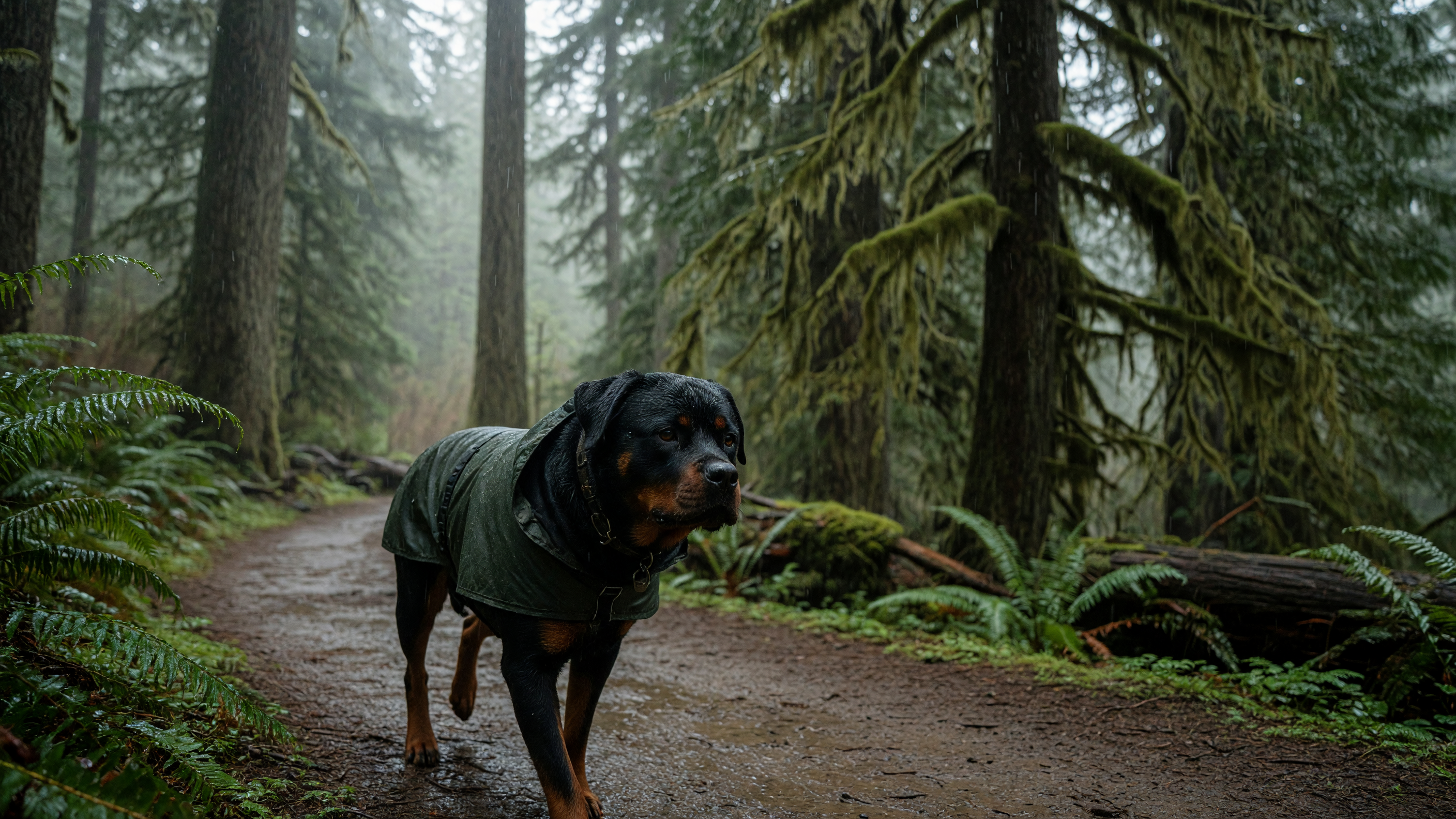
Here is a truth every dog owner in Greater Victoria learns quickly: summer is not the main season. Rain is. Victoria receives between 640 and 887 millimetres of rainfall every year, depending on where you measure, and the vast majority of it falls between October and March. That is six solid months of wet trails, soggy paws, mud-caked fur, and the perpetual question: do we still go out today?
The answer, of course, is yes. Dogs need to walk every day, rain or shine. Ziggy, our 6-year-old Rottweiler, does not care if the sky is open. Lady Sahara, our 13-year-old Lab mix, has a slightly more refined relationship with precipitation, she will stand at the door, look outside, look at you, and make her feelings known. But even Sahara knows that a wet walk is better than no walk at all.
As the team behind the Greater Victoria Dog Guide, we have spent years walking these trails through every kind of weather the Pacific Northwest throws at us. This guide covers everything you need to know about keeping your dog safe, dry, and happy during Victoria's long rainy season: the best trails for wet weather, essential gear that actually works, paw and skin care tips, and where to go when the rain is coming down sideways.
Understanding Victoria's Rainy Season
Victoria sits in the rain shadow of the Olympic Mountains, which means it gets significantly less rain than Vancouver or the rest of the BC coast. But less rain is not no rain. The numbers tell the story:
- Annual rainfall: 640 to 887 mm depending on the station (Victoria Gonzales averages 641 mm; Victoria International Airport averages 887 mm)
- Wettest months: November (averaging 90 to 115 mm) and December (averaging 95 to 120 mm)
- Rainy season: October through March, with the heaviest precipitation in November, December, and January
- Driest months: July and August, averaging just 15 to 27 mm combined
- Rainy days per year: Victoria averages 150 to 170 days with measurable precipitation
For context, Toronto averages about 830 mm annually, and Calgary gets roughly 419 mm. Victoria is a consistently wet city for half the year. And unlike a prairie downpour that comes and goes, Victoria's rain tends to be steady, low-intensity drizzle that lasts for hours or even days. This kind of rain soaks through light jackets, pools on trails, and turns dirt paths into mud.
The practical takeaway for dog owners: you cannot wait for dry days. You need a strategy for walking in the rain, and you need gear that works.
Why Rainy-Day Walking Matters
Skipping walks during the rainy season is tempting, but it creates problems that compound quickly:
- Behavioural issues: Dogs who do not get enough exercise and mental stimulation become restless, destructive, and anxious. A bored Rottweiler (trust us, Ziggy has proven this) is a force of nature.
- Weight gain: Reduced activity combined with the same food intake leads to winter weight gain, which puts extra stress on joints, especially for senior dogs like Sahara.
- Potty training regression: Dogs who refuse to go outside in the rain may start having accidents indoors, undoing months of training.
- Mental health: Dogs, like humans, benefit from fresh air, new smells, and outdoor stimulation. The rainy season is long enough that skipping walks regularly can affect your dog's overall mood and behaviour.
The solution is not to tough it out with inadequate gear. The solution is to invest in the right equipment, choose the right trails, and adjust your routine so that rainy-day walks become a comfortable habit instead of a dreaded chore.
The Best Rain-Friendly Trails in Greater Victoria
Not all trails are created equal when it rains. Some become impassable mud pits. Others drain well, have canopy cover, or offer paved sections that stay walkable even in a downpour. Here are our top picks for wet-weather dog walking, ranked by how well they handle rain.
1. Galloping Goose Regional Trail, The Rain Champion
Why it works in rain: Crushed gravel surface with excellent drainage, wide and flat, passes through tree-covered sections.
The Galloping Goose is our number-one rainy-day recommendation. The trail surface is crushed gravel and packed stone, which sheds water far better than dirt or clay. The trail is wide, flat, and well-maintained, and many sections pass through tree canopy that provides natural rain cover. Even in a steady downpour, the Galloping Goose remains walkable.
Our favourite rainy-day sections are the stretch from the Selkirk Trestle through to the Sooke River, which has excellent tree cover and minimal road crossings, and the section through the Saanich Peninsula near Lochside Drive, where the tree canopy over the old rail bed creates a natural shelter. Bring a headlamp if you are walking after 4 PM in November or December, it gets dark fast.
2. Beacon Hill Park, The Quick Looper
Why it works in rain: Paved walking paths that stay clear, short loops perfect for a 20-minute wet-weather walk, easy car access.
On days when the rain is heavy and you need a short, no-fuss walk, Beacon Hill Park is hard to beat. The paved pathways wind through mature trees and gardens, and the park's flat terrain means no slippery hillsides or washed-out trail sections. The south end has an off-leash area where Ziggy can burn off energy even in the rain.
The Dallas Road waterfront trail, accessible from Beacon Hill, is another solid rainy-day option. The paved seawall is exposed to wind, so plan your visit for a calm, drizzly day when the ocean views and the sound of waves make it genuinely enjoyable.
3. Lochside Regional Trail, The Forest Canopy Pick
Why it works in rain: Tree-lined sections provide natural shelter, gravel surface drains well, flat and easy.
The Lochside trail runs from the Swartz Bay ferry terminal south toward Sidney and connects to the Galloping Goose network. The sections passing through Saanich farmland and wooded corridors offer good canopy cover and a gravel surface that handles rain well. It is flat, quiet, and perfect for a steady-paced walk without mud complications.
4. Mount Douglas Park, The Sheltered Forest Walk
Why it works in rain: Dense Douglas fir and cedar canopy provides significant rain shelter, forest floor absorbs moisture, lower trails stay manageable.
Mount Douglas has a dense forest canopy that intercepts a surprising amount of rainfall before it reaches the trail surface. The lower forest trails, particularly the loop accessible from the Ash Road entrance, wind through thick Douglas fir and western red cedar, and the packed dirt surface stays relatively firm in moderate rain. Avoid the upper trails and summit on very wet days, as the exposed sections become slippery.
5. Francis/King Regional Park, The Quiet Rain Walk
Why it works in rain: Garry oak and Douglas fir canopy, loamy forest floor, low traffic even on weekends.
Francis/King is quieter than most Greater Victoria parks, and that quietness intensifies in the rain. The forest trails pass through mature Garry oak and Douglas fir, and the loamy forest floor absorbs rainfall without becoming a swamp. On a misty November morning, this park feels like stepping into a Pacific Northwest fairy tale. The off-leash access on most trails means Ziggy can explore freely while we stay relatively dry under the canopy.
6. The Galloping Goose Selkirk Trestle to Metchosin, The Adventure Pick
Why it works in rain: Gravel surface, rural character, and the covered trestle provides a mid-walk shelter point.
For dog owners who want a longer rainy-day walk with more adventure, the section of the Galloping Goose heading west from the Selkirk Trestle into Metchosin is excellent. The trail passes through a mix of open farmland and forested sections, and the historic Selkirk Trestle itself provides a covered spot to pause, regroup, and let your dog shake off under shelter before continuing.
Trails to Avoid in Heavy Rain
Some Greater Victoria trails become genuinely unpleasant or unsafe in heavy rain:
- Thetis Lake trails, The dirt trails around Thetis Lake become extremely muddy and slippery when wet. Clay-heavy sections turn into slick, red-brown mud that is hard on paws and treacherous on hillsides.
- Gowlland Tod Provincial Park, The rocky outcrops and steep sections become dangerously slippery when wet. Limestone and moss-covered rock is essentially an ice rink in the rain.
- Mount Douglas summit, The exposed upper trails and summit area have no rain shelter and can be wind-blasted during storms. Save this for dry days.
- Sooke Potholes, The rocky riverside trails are slippery when wet, and water levels rise quickly during storms, potentially cutting off sections of the trail.
- Any trail with steep clay sections, Trails through areas with heavy clay soil, parts of the Galloping Goose near Humpback Ridge, and some of the Cowichan Valley trails become impassable mud slides.
Essential Rainy-Day Gear for Dogs
The right gear transforms rainy walks from miserable to enjoyable. Here is what we carry on every wet-weather walk, tested on Ziggy and Sahara through multiple Victoria rainy seasons.
Dog Rain Jacket
A well-fitted dog rain jacket is the single most important piece of rainy-season gear. Look for one with a harness slit or D-ring opening on the back so you can clip a leash without removing the jacket. The jacket should cover the chest and belly, where most of the splashing happens, and have a snug but comfortable fit around the neck and hindquarters.
For large breeds like Ziggy, a jacket with reflective trim is essential. Victoria's rainy-season walks often happen in low light, dawn, dusk, or mid-winter afternoons when it is grey by 4 PM. Reflective details on your dog's jacket make them visible to cyclists, cars, and other trail users.
Quick-Dry Microfibre Towels (Bring Two)
One towel is never enough. Pack two quick-dry microfibre towels: one for the initial mud-and-water removal, and a second for the final drying once your dog is mostly clean. Microfibre absorbs more water than cotton, dries faster, and takes up less space in your bag. Keep one in your car permanently.
The towel-off process matters. A thorough drying after a rainy walk prevents skin irritation, especially in the armpits, groin, and between the toes where moisture gets trapped. Lady Sahara, with her thicker coat, gets a full 5-minute towel session every rainy walk.
Waterproof Dog Booties
Victoria's rainy season overlaps with road salt application on major roads and sidewalks. Between November and March, municipal crews treat roads with salt and sand that irritates and can burn paw pads. Waterproof dog booties solve two problems at once: they keep paws dry and clean, and they protect against salt, sand, and the chemical de-icers used on busier roads.
The challenge with booties is getting your dog to wear them. Introduce them gradually at home, one bootie at a time, with lots of treats. Practice in the house for 10 minutes a day for a week before attempting a walk. Ziggy still gives us the look, but he tolerates them, and his paw pads are noticeably healthier in winter because of it.
High-Visibility Gear
Victoria's rainy season is also its darkest season. By mid-November, the sun sets before 4:30 PM. If you walk your dog after work, which most people do, you are walking in the dark. A reflective leash, a light-up collar tag, or a clip-on LED light for your dog's jacket makes an enormous difference in visibility. For yourself, a headlamp is invaluable, it keeps both hands free for the leash and waste bags.
Collapsible Water Bowl and Fresh Water
Dogs drink puddle water. This is a fact of life. Rainy-season puddles, however, can contain runoff from roads (oil, antifreeze, salt), lawn chemicals, and bacteria. Bring fresh water and a collapsible bowl on every walk, and offer water frequently so your dog is not tempted by the nearest puddle. This is especially important on trails near roads or through residential areas where runoff is a concern.
Paw and Skin Care During Rainy Season
Victoria's persistent rain creates specific skin and paw issues that dog owners should watch for:
Moisture Dermatitis
Dogs who spend extended time in wet conditions, especially those with thick coats or skin folds, can develop moisture dermatitis, an inflammation of the skin caused by prolonged dampness. Watch for redness, itching, or a musty smell in the armpits, groin, belly, or between the toes. Keeping your dog as dry as possible during walks and thoroughly drying them after is the best prevention.
Paw Pad Softening
Constant exposure to wet ground softens paw pads, making them more vulnerable to cuts, abrasions, and irritation from salt and chemicals. If you notice your dog's paw pads looking softer or lighter in colour than usual, they may need more protection. Paw wax applied before walks creates a moisture-resistant barrier, and booties provide the most complete protection.
Ear Infections
Floppy-eared breeds are especially prone to ear infections during the rainy season. Water trapped in the ear canal creates the perfect environment for yeast and bacteria. After every rainy walk, lift your dog's ear flaps and check for moisture. A quick wipe with a veterinary ear cleaning solution on a cotton ball keeps ears dry and infection-free.
Nail Maintenance
Wet ground is softer than dry ground, which means your dog's nails wear down less naturally during rainy-season walks. Check nail length more frequently during the wet months, overgrown nails affect your dog's gait and can lead to joint issues over time.
When the Rain Is Too Much: Indoor Alternatives
Some days the rain is simply too intense, or the wind chill makes it genuinely unpleasant. On those days, your dog still needs mental stimulation and a change of scenery. Here are our favourite indoor and sheltered options.
Dog-Friendly Breweries and Pubs
Greater Victoria has an extraordinary concentration of dog-friendly establishments. Several of our favourite patio spots also welcome dogs inside during the rainy season:
- Whistle Buoy Brewing Co. in Market Square, Heated indoor seating with a welcoming attitude toward well-behaved dogs.
- Driftwood Brewery, A spacious taproom that handles dogs well, with water bowls provided.
- The Fernwood Inn, A neighbourhood pub that has always been dog-friendly, perfect for a quick warm-up stop on a rainy walk through Fernwood.
- The Beagle Pub in Cook Street Village, Named after a dog breed for a reason, provides dog beds and water bowls indoors.
- Brass Monkey Taproom, Has a dedicated dog menu with locally sourced ingredients, making it a genuinely special rainy-day outing for you and your pup.
A rainy-day brewery walk is one of our favourite Victoria traditions. Grab a rain jacket, leash up the dogs, walk to your nearest dog-friendly spot, and wait out the worst of it over a warm drink.
Mental Stimulation at Home
On storm days when going out is not practical, indoor enrichment keeps your dog's brain active:
- Nose work and scent games: Hide treats around the house and let your dog find them. Start easy, then increase difficulty. This engages the same mental pathways as a walk.
- Puzzle feeders and food-dispensing toys: Kong toys, snuffle mats, and puzzle boards turn mealtime into a 20 to 30 minute brain workout.
- Training sessions: Use rainy afternoons to reinforce commands or teach new tricks. Five-minute training sessions are more mentally tiring than a 30-minute walk.
- Tug and indoor fetch: For larger homes, a game of tug or indoor fetch with soft toys burns energy without requiring outdoor access.
Covered Walks and Shelters
Several Greater Victoria locations offer partially covered or sheltered walking options:
- The Selkirk Trestle on the Galloping Goose provides a covered structure mid-trail where you can pause and regroup.
- Beacon Hill Park's internal paths pass under dense tree canopy that provides significant rain shelter.
- Fisherman's Wharf has covered dock sections and overhanging buildings that create partial shelter for a short walk.
- Galloping Goose underpasses at several road crossings provide brief shelter during steady rain.
Rainy-Season Walking Routine: What Works
After years of walking dogs through Victoria's rainy season, here is the routine that works best for us:
- Dress your dog first. Rain jacket on, booties if needed, harness over the jacket. Do this inside before you leave.
- Layer your own clothing. A waterproof outer shell over a fleece or merino base layer keeps you warm and dry. Wet, cold walkers cut walks short.
- Pack the towel bag. Two microfibre towels, waste bags, fresh water, collapsible bowl, and a small treat pouch. Keep this in a dedicated waterproof bag by the door.
- Choose the right trail. Check the weather forecast and pick a trail that matches the conditions. Light drizzle? Any trail works. Heavy rain with wind? Stick to the Galloping Goose or a sheltered forest walk.
- Shorten the distance, not the frequency. On very wet days, a 20-minute walk is fine. The goal is to get out, get some movement, and keep the routine. A short walk beats no walk.
- Post-walk drying ritual. Towel off immediately at the car or door. Pay special attention to paws, ears, and belly. Check for ticks even in winter (they are less active but not absent). Wipe paw pads if booties were not used.
- Check paws for cracks or irritation. A 30-second paw check after every rainy walk catches problems early.
A Note on Visibility and Safety
Victoria's rainy season coincides with its darkest months. Between reduced daylight, rain-fogged glasses, and grey skies, visibility drops significantly. For both you and your dog:
- Wear bright or reflective clothing. Cyclists, joggers, and cars need to see you on shared trails.
- Use a headlamp or flashlight. Hands-free lighting is safer than a phone flashlight.
- Put a light or reflective tag on your dog. Even in daylight, rain reduces visibility. A clip-on LED on your dog's collar or jacket helps.
- Stay on well-used trails. Rainy-season isolation is real. Stick to busier trails where other walkers are present, especially in the darker months.
- Watch for fallen branches and debris. Victoria storms drop branches, especially from the large Douglas fir and maple trees that line many trails. Stay alert and keep your dog close when walking through recently storm-damaged areas.
The Bottom Line
Victoria's rainy season is long, but it does not have to be miserable. With the right gear, a shortlist of rain-friendly trails, and a few indoor backup plans, wet-weather dog walking becomes a comfortable routine instead of a reluctant chore. The trails are quieter in the rain, the forest smells incredible, and your dog does not care one bit about the forecast.
Invest in a good rain jacket for your dog, pack the towels, choose trails with good drainage and canopy cover, and get out there. Greater Victoria is beautiful in the rain, and your dog deserves every walk, rain or shine.
For more seasonal guides, check out our articles on blue-green algae safety at Victoria lakes, tick and parasite prevention, and our complete guide to dog-friendly living in Greater Victoria.
Stay dry out there, Victoria. Ziggy and Lady Sahara will be on the Galloping Goose, rain or shine.