
Wildfire Smoke Season in Victoria: How to Keep Your Dog Safe When the Air Turns Hazardous
By Happy Homes Team - eXp Realty - Victoria, BC Real Estate Team
Wildfire Smoke & Dog Safety in Greater Victoria:
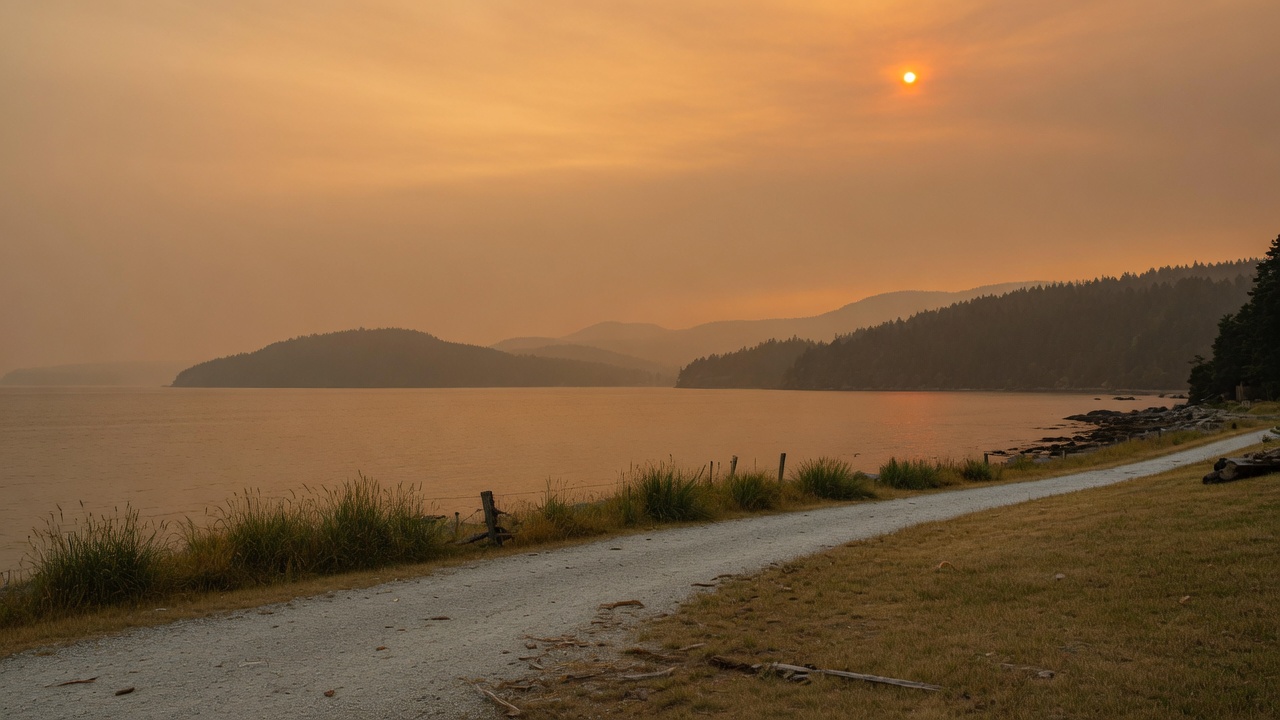
Every summer in British Columbia, the familiar haze of wildfire smoke drifts across Vancouver Island and settles over Greater Victoria. The skies turn amber, the air smells faintly of woodsmoke, and the Air Quality Health Index climbs into ranges that make even a short walk outside feel uncomfortable. For dog owners, the question is immediate and urgent: is it safe to take my dog out in this?
The answer depends on how bad the smoke is, how long you are outside, and your dog's individual health. As the team behind the Greater Victoria Dog Guide, and as dog parents to Ziggy, our 6-year-old Rottweiler, and Lady Sahara, our 13-year-old Lab mix, we have lived through enough smoky summers to know that wildfire smoke is not just a human health issue. Dogs breathe the same air, and in many ways, they are more vulnerable to it. This guide covers everything Victoria dog owners need to know about wildfire smoke: how to read the air quality index, what smoke does to dogs, how to protect your pet, and when to call the vet.
Why Wildfire Smoke Is Dangerous for Dogs
Wildfire smoke is a complex mixture of gases and fine particles produced when vegetation burns. The component that matters most for your dog's health is PM2.5, fine particulate matter that is 2.5 micrometres or smaller in diameter. To put that in perspective, a PM2.5 particle is about 30 times smaller than the width of a single human hair. These particles are small enough to pass through your dog's nasal passages, travel deep into the lungs, and even enter the bloodstream.
When a dog inhales wildfire smoke, the effects can include:
- Inflammation of the airways, leading to coughing, wheezing, and difficulty breathing
- Aggravation of existing conditions, including asthma, bronchitis, heart disease, and kennel cough
- Eye and nasal irritation, including red, watery eyes and persistent sneezing
- Increased risk of respiratory infection, as smoke-damaged airways are more susceptible to bacteria and viruses
- Cardiovascular stress, particularly in senior dogs or those with heart conditions
Dogs with certain characteristics face higher risk:
- Brachycephalic breeds (pugs, bulldogs, French bulldogs, shih tzus), whose shortened airways make them more susceptible to particle obstruction and inflammation
- Senior dogs, like our Lady Sahara at 13, whose immune and respiratory systems may be less resilient
- Puppies, whose lungs and airways are still developing
- Dogs with pre-existing respiratory or cardiac conditions, including collapsed trachea, chronic bronchitis, or heart murmurs
- Small dogs, who breathe faster relative to their body size and inhale proportionally more particulate matter per breath
How to Read the Air Quality Health Index (AQHI)
British Columbia uses the Air Quality Health Index (AQHI), a health-based scale from 1 to 10+ that measures the combined risk of three air pollutants: PM2.5, nitrogen dioxide (NO2), and ground-level ozone (O3). The AQHI is updated hourly during smoke events and is the most reliable tool for deciding when to take your dog outside.
Here is how to interpret the scale for your dog:
| AQHI Range | Risk Level | What to Do With Your Dog |
|---|---|---|
| 1 to 3 | Low | Enjoy normal outdoor activities. Ideal for hiking, park visits, and patio time. |
| 4 to 6 | Moderate | Short walks are fine for healthy dogs. Reduce intensity for seniors, puppies, or dogs with respiratory issues. Watch for any unusual coughing or lethargy. |
| 7 to 9 | High | Limit outdoor time to brief bathroom breaks only (5 minutes or less). Keep all dogs indoors. Avoid all trails, parks, and strenuous activity. |
| 10+ | Very High | Keep dogs indoors at all times except essential bathroom breaks. Close all windows. Use air filtration if available. This is a health emergency level for vulnerable dogs. |
You can check real-time AQHI readings for Greater Victoria at weather.gc.ca/airquality or through the BC Air Quality website at airquality\.gov\.bc\.ca. During active wildfire events, readings are updated hourly. We check the AQHI every morning during smoke season, just like we check the weather.
Signs Your Dog Is Affected by Smoke
Dogs cannot tell you their lungs hurt. They cannot say the smoke is bothering their eyes. It is up to you to watch for the signs that wildfire smoke is affecting your dog. The symptoms range from mild irritation to serious respiratory distress:
Mild to Moderate Symptoms
- Coughing or hacking, a dry, persistent cough that was not present before the smoke event
- Watery or squinting eyes, often with visible redness in the whites of the eyes
- Nasal discharge, clear or slightly discoloured mucus from one or both nostrils
- Excessive sneezing
- Mild lethargy, your dog is less interested in play or walks than usual
- Loss of appetite, refusing meals or treats they normally enjoy
Severe Symptoms (Seek Veterinary Care Immediately)
- Laboured or rapid breathing, visible chest movement, breathing with mouth open and tongue extended for extended periods
- Wheezing or gasping, audible breathing sounds even at rest
- Blue or grey gums, a sign of oxygen deprivation requiring emergency treatment
- Stumbling or disorientation, indicating the brain is not getting enough oxygen
- Persistent vomiting, especially if accompanied by respiratory distress
- Collapse, any loss of consciousness or inability to stand
If your dog shows any severe symptoms, do not wait. Get to a veterinarian or emergency animal hospital immediately. Treatment for severe smoke inhalation typically involves supplemental oxygen therapy, IV fluids, and supportive care.
How to Protect Your Dog During Smoke Season
Prevention is the best medicine when it comes to wildfire smoke. Here is our practical, step-by-step approach to keeping Ziggy and Sahara safe during every smoky summer in Victoria:
1. Monitor the AQHI Daily
Make checking the Air Quality Health Index part of your morning routine during fire season, typically July through September. Set a browser bookmark for the BC air quality page or download an app that sends AQHI alerts. If the reading is above 6, start adjusting your dog's routine.
2. Keep Dogs Indoors With Windows Closed
When the AQHI climbs above 7, keep your dog inside with all windows and doors closed. This is the single most effective step you can take. If your home does not have air conditioning, close curtains and blinds on the sun-facing side to keep temperatures manageable without opening windows.
3. Use Air Filtration If Possible
A HEPA air purifier can dramatically reduce indoor PM2.5 levels. If you do not have a standalone unit, you can create a makeshift filter by attaching a HEPA furnace filter to a box fan, with the filter intake facing outward. Even running your home's furnace fan with a clean filter can help circulate cleaner air through the house.
4. Shorten All Outdoor Time
During high smoke events, outdoor time should be limited to brief, essential bathroom breaks. Five minutes or less is ideal. Walk your dog in the most sheltered area of your yard or the nearest grassy patch, then get back inside. Skip the walk entirely if you can manage bathroom breaks in a yard or on a very short leash near your front door.
5. Avoid Strenuous Exercise
Even on days when the air looks hazy but does not feel terrible, avoid jogging, fetch, or extended play with your dog. Strenuous exercise causes your dog to breathe faster and deeper, which means they inhale significantly more particulate matter. A calm, leashed potty break is fine; a 30-minute game of fetch is not.
6. Wipe Down After Outdoor Trips
Wildfire smoke deposits fine particles on your dog's fur, especially around the face, eyes, and nose. After any trip outside during a smoke event, use a damp towel or pet-safe wipes to gently wipe your dog's face, paws, and coat. This reduces the amount of particulate matter your dog ingests when they groom themselves.
7. Provide Plenty of Fresh Water
Smoke exposure can cause dehydration and dry out mucous membranes. Make sure your dog has constant access to clean, fresh water. Some dogs drink more during smoke events, which is a normal response. Others may drink less because the air smells strange. Monitor water intake and offer water frequently.
8. Prepare an Emergency Kit
During extended smoke events or if an evacuation becomes necessary, having a pet emergency kit ready is essential. The BC SPCA recommends including:
- Veterinary records and proof of vaccination, many clinics cannot treat your pet without these
- A 3-to-7-day supply of any medications your dog takes regularly
- A copies of your dog's microchip number and current photos for identification
- Food, water, and bowls for at least 3 days
- Leash, collar with ID tags, and a carrier or crate
- A favourite blanket or toy for comfort during stressful situations
Victoria-Specific Considerations
Greater Victoria has some unique factors that affect how wildfire smoke impacts the area:
Marine Air Provides Intermittent Relief
Victoria's coastal location means that ocean breezes can occasionally push smoke away, leading to dramatic swings in air quality within a single day. A morning with an AQHI of 9 can drop to a 5 by afternoon if the wind shifts. However, this relief is unpredictable, and during persistent smoke events, the marine layer can trap smoke close to the ground, making conditions worse than in higher-elevation areas.
Smoke Events Can Last Days or Weeks
In recent years, Greater Victoria has experienced smoke events lasting anywhere from a few days to over two weeks. The 2023 and 2024 fire seasons brought some of the longest periods of degraded air quality the region has seen. Having a plan for extended smoke events, including indoor enrichment activities for your dog, is important.
Indoor Enrichment for Smoke Days
Dogs cooped up indoors during smoke events get bored and restless, which can lead to destructive behaviour. Here are our go-to indoor activities for Ziggy and Sahara when the trails are closed:
- Puzzle feeders and food-dispensing toys, stuff a Kong with peanut butter and freeze it for a long-lasting challenge
- Nose work games, hide treats around the house and let your dog search for them
- Training sessions, short 10-minute sessions teaching new tricks or reinforcing old ones
- Gentle indoor tug or fetch, if you have a hallway or large room, short indoor play burns mental energy
- Chew time, long-lasting chews like bully sticks or dental chews keep dogs occupied and calm
When to Call the Vet
The BC SPCA and the American Veterinary Medical Association both advise that any dog showing signs of respiratory distress after smoke exposure should be seen by a veterinarian immediately. Do not wait to see if symptoms improve on their own. Smoke-related lung damage can progress rapidly, and early treatment significantly improves outcomes.
Contact your vet promptly if your dog:
- Coughs persistently for more than a few hours during or after a smoke event
- Shows any change in breathing pattern, speed, or effort
- Develops eye discharge or visible eye irritation that does not resolve after a few hours indoors
- Becomes unusually lethargic or refuses food for more than one meal
- Has a pre-existing heart or lung condition and is showing any new symptoms
For urgent after-hours care in Greater Victoria, WAVES (West Coast Animal Veterinary Emergency Specialty Hospital) and Central Victoria Veterinary Hospital (VCA) both provide 24/7 emergency services.
The Bottom Line
Wildfire smoke is now a regular part of summer in British Columbia, and Victoria is not immune. The good news is that with a little preparation and awareness, you can keep your dog safe through every smoke event. Check the AQHI each morning, keep your dog indoors when air quality is poor, watch for symptoms, and have a plan for extended events.
Greater Victoria still offers some of the best dog-friendly living in Canada. The trails will be there when the air clears, the patios will welcome you back, and the beaches will be waiting. For now, keep it cozy inside, break out the puzzle feeders, and ride out the smoke together.
For more seasonal guides, check out our articles on tick and parasite season safety, blue-green algae danger at Victoria lakes, and hot pavement and summer trail safety for dogs.
Stay safe out there, Victoria. Ziggy and Sahara will be napping on the couch with the windows shut until the air clears.