
Hot Pavement, Happy Paws: Your Summer Trail Guide for Dog Owners in Greater Victoria
By Happy Homes Team - eXp Realty - Victoria, BC Real Estate Team
Hot Pavement Safety & Dog-Friendly Trails in Greater Victoria:
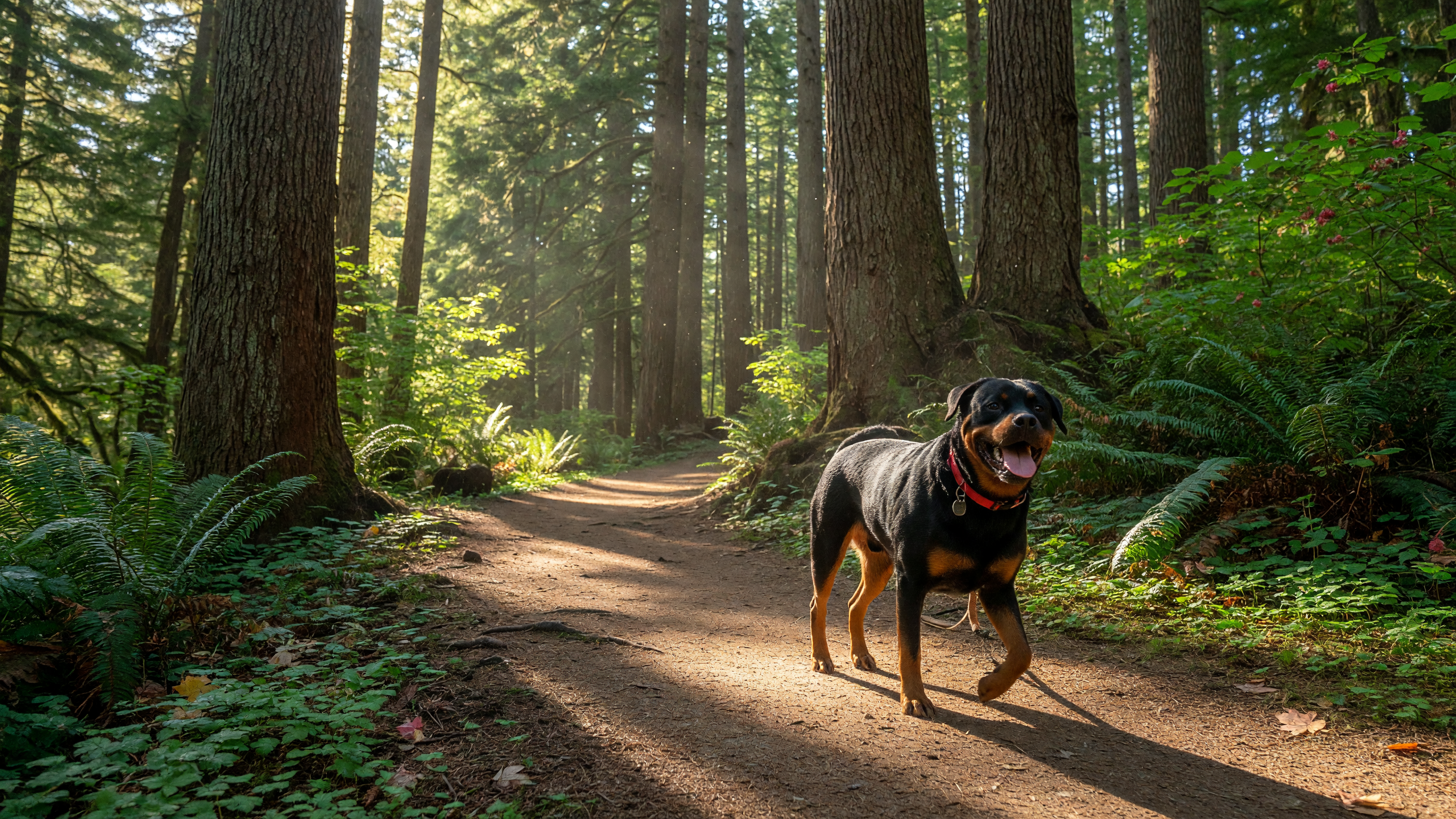
Summer in Greater Victoria is a dog owner's paradise, long golden evenings, ocean breezes, and an endless network of trails winding through old-growth forests and along stunning coastlines. But as the temperatures climb, so does the temperature under your dog's paws. Hot pavement is one of the most common and preventable summer injuries for dogs, and it is a danger that catches many Victoria pet owners off guard every year.
As the team behind the Greater Victoria Dog Guide, and as dog parents to Ziggy, our 6-year-old Rottweiler, and Lady Sahara, our 13-year-old Lab mix, we have spent years mapping the best trails in the region. This guide combines critical hot-pavement safety information with our favourite dog-friendly hiking trails that keep paws cool, bodies active, and tails wagging all summer long.
Why Hot Pavement Is Dangerous for Dogs
Dogs walk barefoot. Unlike humans, they have no shoes, no socks, and no way to protect their paw pads from searing surfaces. A dog's paw pad is tough, but it is not heat-resistant. When pavement temperatures climb, the consequences can be severe:
- At 48°C (118°F): Pavement can cause thermal burns to paw pads in under 60 seconds
- At 52°C (125°F): Second-degree burns (blistering, peeling skin) can occur in 30 seconds or less
- At 60°C (140°F): Third-degree burns and permanent tissue damage can happen almost immediately
Here is what shocks most people: when the air temperature is just 25°C (77°F), asphalt pavement can reach 52°C (125°F). On a sunny afternoon in Victoria, when the thermometer reads a pleasant 22°C, the sidewalk along Government Street or the pavement at a beach parking lot can be hot enough to seriously injure your dog.
The 7-Second Rule: How to Test Pavement Before Your Walk
The simplest and most reliable safety check is the 7-second rule:
Place the back of your hand flat against the pavement. Hold it there for seven seconds. If you cannot keep your hand on the surface comfortably for the full seven seconds, it is too hot for your dog to walk on.
This is the standard recommended by veterinary professionals and animal welfare organizations. We do this every single time we take Ziggy and Sahara out during summer, from walks to patios in Cook Street Village to trailhead hikes.
What Hot Pavement Burns Look Like
If your dog has walked on hot pavement, watch for these warning signs:
- Limping or reluctance to walk, often the first sign your dog is in pain
- Redness or raw skin on the paw pads, especially the centre pad
- Blisters or open wounds, a sign of second-degree burns
- Whimpering or lifting paws repeatedly
- Excessive licking of the paws after a walk
- Avoidance behaviour, your dog refuses to step onto certain surfaces
If you see any of these signs, get your dog off the hot surface immediately, rinse their paws with cool (not cold) water, and contact your veterinarian. Do not apply ice, butter, or home remedies to burned paw pads, these can worsen the damage.
How to Protect Your Dog's Paws on Victoria Pavement
Prevention is always better than treatment. Here are our practical tips for navigating Victoria's streets and sidewalks with your dog during summer:
1. Walk During Cooler Hours
The safest walking times in Greater Victoria during summer are before 10:00 AM and after 6:00 PM. Morning walks benefit from overnight cooling, and evening walks avoid the peak heat of the day. Midday, between 11:00 AM and 4:00 PM, is when pavement temperatures are at their worst.
2. Choose Grass and Dirt Over Concrete
When you are walking in your neighbourhood, steer your dog toward grass, dirt paths, or shaded areas whenever possible. A walk through a grassy park like Beacon Hill or along the dirt trails of the Galloping Goose is far safer than a sidewalk stroll on asphalt.
3. Consider Dog Booties
Dog booties are the most reliable protection against hot pavement. They take some getting used to. Ziggy still gives us the side-eye when we pull them out, but they work. Look for breathable, flexible booties with good grip. Introduce them gradually at home with treats and short sessions before hitting the trail.
4. Carry Paw Wax as a Backup
Paw wax (like Musher's Secret) creates a thin protective barrier on paw pads. Paw wax works best on moderately warm surfaces and keeps pads moisturized between hikes.
5. Bring Water for Paws, Not Just Mouths
Pack a water bottle specifically for rinsing your dog's paws. If you notice your dog showing any signs of discomfort on a hot surface, stop, find shade, and cool their paws with fresh water. A small collapsible water bowl works perfectly for this.
The Best Dog-Friendly Hiking Trails for Cool Paws in Greater Victoria
Now for the fun part. The best way to avoid hot pavement entirely is to hit the trails. Greater Victoria has a remarkable network of dog-friendly parks and trails with natural surfaces, dirt, gravel, wood chips, and forest floor, that stay significantly cooler than urban pavement. Here are our top picks for summer hiking with your dog, organized by the features that matter most.
1. Thetis Lake Regional Park, The All-Rounder
Location: View Royal & Langford • Difficulty: Easy to moderate • Off-leash: Yes, on most trails (beach restricted June 1 to September 15)
Thetis Lake is one of the most popular dog-friendly hiking destinations in Greater Victoria, and for good reason. The 4.5 km loop around Upper and Lower Thetis Lake winds through shaded Douglas fir forest with mostly packed dirt and gravel trails. The canopy cover keeps surface temperatures well below what you would find on exposed pavement, even on the hottest days.
Dogs can be off-leash on most trails year-round, making this a favourite for Ziggy and Sahara. However, dogs are restricted from the beach and picnic areas between June 1 and September 15 to protect nesting shorebirds. Stick to the forest trails and you and your pup will have a wonderful time.
Summer tip: Go early. The parking lot fills up fast on weekends, and the trail is busiest between 10 AM and 2 PM. Aim for a 7 or 8 AM start for the best experience.
2. Francis/King Regional Park, The Hidden Gem
Location: Saanich • Difficulty: Easy • Off-leash: Yes, on most trails (on-leash on the Elsie King Trail)
Tucked away in the Saanich Peninsula, Francis/King is one of the quietest and most beautiful dog-friendly parks in the region. The Centennial Trail and connecting loops pass through mature Garry oak and Douglas fir forest with soft, loamy dirt paths that stay cool and gentle on paws. The deep forest shade means surface temperatures stay low even at midday.
Dogs can be off-leash on most trails under reliable voice control, with the exception of the accessible Elsie King Trail where they must be on-leash. The park is less trafficked than Thetis Lake, making it ideal for dogs who prefer quieter environments or who are reactive around other dogs.
Summer tip: The forest canopy here is particularly dense, which makes this an excellent choice for midday hikes when other trails are too warm.
3. Gowlland Tod Provincial Park, The Coastal Explorer
Location: View Royal & Highlands • Difficulty: Moderate • Off-leash: No, dogs must be on-leash at all times
Gowlland Tod offers a completely different experience from the lake-loop trails. The network of trails climbs through rocky outcrops, second-growth forest, and along the Gowlland Tod ridge with sweeping views of the Saanich Inlet and Finlayson Arm. The trails are mostly dirt and rock, with excellent drainage that keeps surfaces cool.
While dogs must be on-leash throughout the park to protect sensitive wildlife habitat, the trails are quiet, scenic, and well-maintained. This is a great choice for dogs who need a structured hike without off-leash distractions. Note: Dogs are not permitted at the Tod Inlet sandy beach area.
Summer tip: The Tod Inlet trailhead provides the easiest access. Park at the end of Munn Road and follow the gentle trail to the inlet, perfect for senior dogs like Lady Sahara who enjoy a moderate pace with beautiful scenery.
4. Mount Douglas Park, The Urban Forest Escape
Location: Saanich • Difficulty: Easy to challenging • Off-leash: Yes, on most trails
Mount Douglas (known locally as "Mount Doug") offers over 5 km of hiking trails through a municipal park with dense forest cover, open meadows, and panoramic summit views. The trail system includes everything from gentle, wide paths to steeper single-track routes, all with natural dirt and gravel surfaces.
Dogs are welcome on-leash on all trails, and many of the forest trails allow off-leash access under control. The deep shade from the mature forest canopy keeps trail surfaces significantly cooler than nearby streets, making this an excellent summer option for dogs who love to explore.
Summer tip: The north side trails are more shaded and less crowded. For a rewarding climb, take the trail to the summit where the panoramic views of the Strait of Juan de Fuca and the Olympic Mountains are spectacular.
5. Sooke Potholes Regional Park, The Swimming Hole
Location: Sooke • Difficulty: Easy to moderate • Off-leash: No, dogs must be on-leash at all times
For dogs who love water, the Sooke Potholes are hard to beat. The park features a stunning series of deep, clear pools carved into the Sooke River by centuries of water flow. The trails follow the river through shaded forest, and the cool river water is perfect for a summer dip.
Dogs must be on-leash throughout the park, but the riverside trails have soft dirt and rock surfaces, and the opportunity for your dog to cool off in the river makes this a top summer pick. The drive from Victoria is about 40 minutes, making this an excellent half-day adventure.
Summer tip: Arrive early on weekends. The parking areas near the main potholes fill up by mid-morning. The upper parking area provides easier access to less-crowded river pools.
6. The Galloping Goose Regional Trail, The Long Stroll
Location: Victoria to Sooke (55 km) • Difficulty: Easy • Off-leash: Varies by section, check signage
The Galloping Goose is a former railway line converted to a multi-use trail, and it offers a continuous, mostly flat route from downtown Victoria all the way to Sooke. The trail surface is crushed gravel and packed dirt, far cooler and softer than pavement. It passes through urban areas, farmland, and forested sections, giving you endless variety.
Dogs must be on-leash on most sections, but the sheer length and variety of the trail mean you can always find a quiet stretch. The sections through Sooke, Metchosin, and the Saanich Peninsula are the most scenic and the least crowded.
Summer tip: The section from the Selkirk Trestle to the Sooke River is particularly beautiful, with tree canopy cover and several water access points along the way.
Quick-Reference Trail Comparison
| Trail | Off-Leash? | Water Access | Best For |
|---|---|---|---|
| Thetis Lake | Yes, most trails | Lake (restricted Jun to Sep) | All-around favourite |
| Francis/King | Yes, most trails | No | Quiet forest walks |
| Gowlland Tod | No, on-leash | Coastal views | Scenic moderate hike |
| Mount Doug | Yes, most trails | No | Summit views |
| Sooke Potholes | No, on-leash | River pools | Swimming dogs |
| Galloping Goose | Varies | Some sections | Long flat walks |
Summer Trail-Heading Checklist
Before you hit any trail this summer, make sure you have these essentials packed:
- Fresh water and a collapsible bowl, enough for the entire hike, plus extra
- Paw wax or booties, especially for trails that cross any pavement sections
- A towel, for drying paws after water crossings and for cooling your dog down
- Dog waste bags, all Greater Victoria trails require you to pick up after your dog
- A fixed-length leash, retractable leashes are banned in Saanich parks and impractical on trails
- Treats and a portable first-aid kit, for minor scrapes or thorn removal
- Your phone, charged, with the number of your nearest emergency vet saved
What to Do If Your Dog Burns a Paw Pad
Even with the best precautions, accidents happen. If you suspect your dog has burned a paw pad on hot pavement or a trail surface:
- Move to shade immediately and stop all activity
- Cool the affected paws with cool (not ice-cold) running water for 10 to 20 minutes
- Do not apply ice directly, it can cause further tissue damage
- Do not apply butter, oil, or home remedies, these trap heat and can introduce infection
- Wrap the paws loosely with clean, damp gauze to protect the area during transport
- Contact your veterinarian or visit an emergency clinic if blisters, raw skin, or bleeding are visible
For urgent after-hours care, WAVES (West Coast Animal Veterinary Emergency Specialty Hospital) and Central Victoria Veterinary Hospital (VCA) both provide 24/7 emergency services in Greater Victoria.
The Bottom Line
Summer in Victoria should be about adventures with your dog, not emergency vet visits. The pavement beneath your dog's paws can be up to 30°C hotter than the air around you, and that invisible danger is easy to overlook when the weather feels pleasant. The 7-second rule takes zero effort and can save your dog from painful burns.
And the best news? Greater Victoria is loaded with incredible dog-friendly trails where natural dirt, gravel, and forest floor surfaces keep paws cool and happy. From the shaded loops of Thetis Lake to the river pools of Sooke Potholes, there is a perfect summer trail for every dog and every fitness level.
For more summer guides, check out our articles on blue-green algae safety at Victoria lakes, keeping your dog cool on Victoria patios, and our complete guide to dog-friendly beaches in Greater Victoria.
Enjoy the trails, Victoria. Give Ziggy and Lady Sahara a pat from us, they will be on the Thetis Lake trail bright and early this weekend.