
Heat Stress vs Heatstroke in Dogs: How to Tell the Difference and When to Act
By Anna Hakim & Perry Fanthorpe, Happy Homes Team, eXp Realty | AI Certified Agents
Heat Stress vs Heatstroke in Dogs, Greater Victoria:
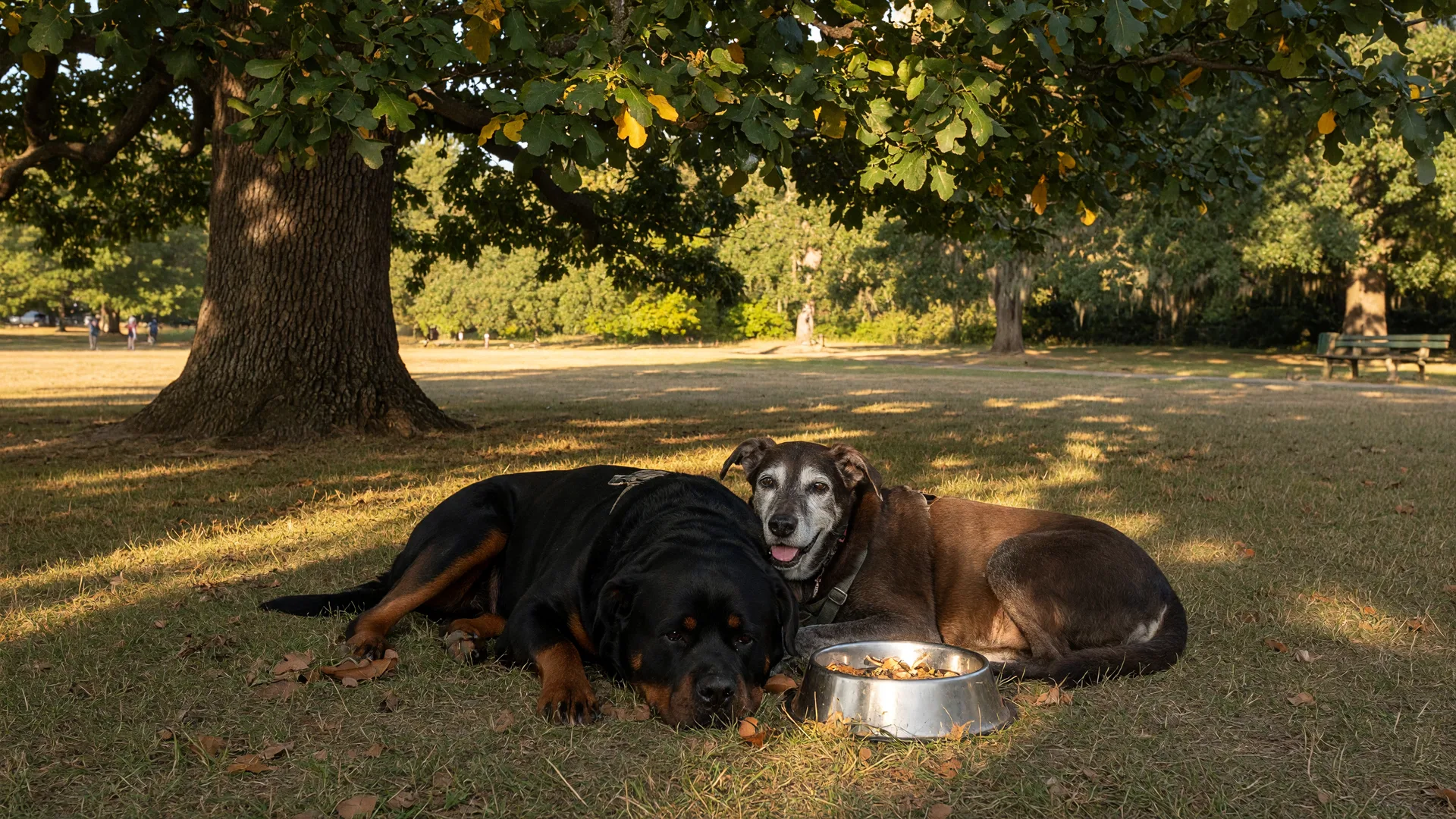
A few weeks ago we were walking Ziggy and Sahara along the Galloping Goose near the Selkirk Trestle on what felt like a perfectly pleasant evening. The temperature was maybe 22 degrees, a light breeze was coming off the harbour, and it seemed like the ideal time for an evening stroll. Halfway through the walk, we noticed Ziggy's panting was louder than usual. Not alarming, but noticeable. We found a bench in the shade, sat down with him for ten minutes, offered water, and watched his breathing return to normal. If we had kept walking, if we had pushed through because the breeze felt cool on our own skin, we might have missed the transition from manageable heat stress to something much more dangerous. That evening reminded us how easily the line between heat stress and heatstroke blurs, especially in a city where the coastal breeze can trick you into thinking conditions are cooler than they actually are for your dog.
This guide is about that line. We already published a detailed emergency guide on heatstroke recognition and first aid, but understanding the difference between heat stress and heatstroke is a separate skill. Heat stress is common, manageable, and every dog owner in Victoria should know how to handle it. Heatstroke is a race against the clock. Knowing which one you are dealing with, and knowing when heat stress has crossed into emergency territory, could save your dog's life.
The Difference at a Glance
The simplest way to think about it is on a temperature scale. A dog's normal body temperature runs between 37.8 and 39.2 degrees Celsius (100 to 102.5 degrees Fahrenheit). That is already higher than human normal, so do not be alarmed if your dog feels warm to the touch on a summer day. The trouble starts when the temperature climbs past 39.5 degrees.
The Temperature Spectrum: Normal to Emergency
- 37.8 to 39.2 degrees Celsius (100 to 102.5 degrees Fahrenheit): Normal. A healthy, resting dog. Nothing to worry about.
- 39.5 to 40 degrees Celsius (103 to 104 degrees Fahrenheit): Heat stress. Your dog is working hard to cool down. This is the yellow zone. Stop activity, find shade, offer water, and monitor closely. Most dogs recover here with no lasting effects.
- 40 to 41 degrees Celsius (104 to 106 degrees Fahrenheit): Heatstroke onset. This is a medical emergency. Start cooling immediately and contact your vet. The body's cooling mechanisms are overwhelmed.
- Above 41 degrees Celsius (106 degrees Fahrenheit): Critical. Organ damage begins. Cool during transport to an emergency vet. Every minute matters.
Heat Stress: What It Looks Like and What to Do
Heat stress is the stage your dog goes through before heatstroke. It is the body's way of saying that it is working hard to stay cool and needs a break. The key to managing heat stress is recognizing it early and taking action before it escalates.
Signs of Heat Stress
- Moderate to heavy panting that slows when the dog rests. The dog is working to cool themselves, but the system is still functioning. If you sit in the shade with them for 5 to 10 minutes, the panting should gradually ease.
- Drinking eagerly when offered water. A dog in heat stress still has normal thirst response and will drink readily.
- Tired, slower movement, but still walking steadily. They may lag behind on the trail, lie down mid-walk, or seem uninterested in continuing. This is your cue to stop, not push harder.
- Gums are pink or slightly flushed. Not bright red and not pale. Normal gum colour is a good sign that circulation is still stable.
- The dog is still alert and responsive. They look at you, wag their tail, take treats, and react to their surroundings.
What to Do for a Dog With Heat Stress
Heat stress is managed at home or on the trail with no veterinary visit necessary in most cases. Here is the protocol:
- Stop all activity immediately. No more walking, fetching, or playing. Every step generates more heat.
- Move to shade or air conditioning. Under a tree, into the car with the AC running, inside your home. Get out of direct sunlight.
- Offer cool, fresh water. Small amounts at a time. Do not let your dog gulp, which can cause vomiting. A few laps every minute is ideal.
- Pour cool water over the paws and belly. Not ice water, just cool tap temperature. Evaporation from the paws and belly helps lower core temperature.
- Rest for 20 to 30 minutes before heading home. Most dogs recover fully from heat stress within half an hour. Do not resume the walk once they seem better. Let them rest and head home by car if possible.
- Monitor for the rest of the day. Watch for unusual tiredness, loss of appetite, or any return of heavy panting while resting. These could indicate the heat stress was worse than you thought.
The Good News About Heat Stress
Heat stress is extremely common in dogs during Victoria summers, and the vast majority recover fully with no lasting effects. The danger is not the heat stress itself. The danger is when heat stress is ignored and allowed to progress into heatstroke. Recognizing it early, stopping, cooling, and resting is all it takes to keep your dog safe.
Heatstroke: The Emergency
Heatstroke is what happens when heat stress is not caught in time, or when it comes on so fast that dogs skip the stress stage entirely. With heatstroke, the body's cooling mechanisms have failed. The dog cannot bring their temperature down on their own, and every minute of delay increases the risk of organ damage and death.
Signs of Heatstroke
- Forceful, relentless panting that does not slow with rest. This is the most telling sign. If you sit in the shade for 10 minutes and your dog is still panting as hard as when you stopped, that is heatstroke-level overheating.
- Thick, ropy, stringy drool. Not the usual watery drool. This is thick, sticky saliva that ropes from the mouth when the dog shakes their head.
- Bright red, dark red, or purple gums. Lift the lip and check. Bright red means the body is diverting blood to the surface to try to cool down. Dark red or purple means oxygen levels are dropping.
- Stumbling, wobbling, disorientation, or collapse. The brain is being affected by the rising temperature. A dog who cannot walk straight or who goes down and cannot get up is in critical danger.
- Vomiting or diarrhoea, especially with blood. The digestive tract is extremely sensitive to overheating. Vomiting in a hot dog is a red flag, not just a stomach upset.
- Seizures or loss of consciousness. Full medical crisis. Cool and transport simultaneously.
What to Do for a Dog With Heatstroke
We covered this in detail in our heatstroke emergency guide, but the core principle is cool first, transport second. Start cooling immediately with cool tap water over the neck, armpits, and groin, use airflow over wet fur, offer small sips of water, then drive to a 24-hour emergency vet while continuing to cool the dog. Do not use ice water, which constricts blood vessels and traps heat inside. Do not assume your dog is fine because they seem better after cooling, internal organ damage can take hours to show.
Greater Victoria has two 24-hour emergency veterinary hospitals. Save both numbers now:
Central Victoria Veterinary Hospital
760 Roderick Street, Victoria
(250) 475-2495Open 24 hours, 365 days. Full emergency and critical care.
WAVES Emergency Hospital
947 Langford Parkway, Victoria
(778) 432-4322Open 24 hours. Specialty services including internal medicine and surgery.
How to Tell the Difference in the Moment
The hardest part is making the call in real time when your dog is panting hard and you are worried. Here is a simple mental checklist we use on our walks:
The Quick Three-Question Check
- 1 Does the panting slow down after 5 to 10 minutes of rest in the shade? Yes means heat stress. No, or barely, means heatstroke.
- 2 Are the gums a healthy pink, or bright red / dark? Pink means heat stress. Red, dark red, or purple means heatstroke.
- 3 Is the dog wobbly or disoriented, or just tired? Tired but steady means heat stress. Stumbling, bumping into things, or lying down and refusing to get up means heatstroke.
If you answer yes to any of the heatstroke indicators even once, treat it as heatstroke. It is always better to be overly cautious.
Why Victoria Dogs Are at Risk Even on Mild Days
One thing that makes Greater Victoria tricky for heat safety is our coastal climate. The air temperature might read 22 degrees, and a cool breeze off the Strait of Juan de Fuca makes it feel pleasant to us. But that does not mean it is safe for your dog. Here is why:
- • Pavement heats up much faster than air. On a 22-degree day, dark asphalt can hit 45 to 50 degrees. Your dog's paws and the heat radiating upward can raise their core temperature even while the air feels pleasant to you.
- • The breeze cools you, not your dog. Dogs cool primarily through panting, not skin evaporation. A breeze that feels refreshing on your skin does not help your dog the same way. They can still overheat in a wind.
- • High humidity on coastal trails. Forest sections of the Galloping Goose, Cuthbert Holmes Park, and parts of Thetis Lake hold more humidity under the canopy. Dogs panting in humid air cool less efficiently because evaporation is slower.
- • We underestimate August heat. By August, we have lived through two months of summer, and a 24-degree day feels cool compared to the heat of July. But it is still warm enough to cause heat stress, especially for a dark-coated dog like Ziggy or an older dog like Sahara.
The August Trap
August is often the hottest month in Victoria, but by this point in the summer we have all relaxed. The heat is familiar. The precautions feel routine. That familiarity is exactly what makes August dangerous. We let our guard down on a 24-degree evening, push the walk a little longer, throw the ball one more time, and suddenly the panting changes from normal to concerning. Stay alert through August, even on days that feel comfortable to you.
Prevention: The Best Way to Never Have to Make the Call
The easiest way to avoid having to distinguish heat stress from heatstroke is to prevent overheating in the first place. The basics are simple and we repeat them because they work:
Walk Before 9 AM or After 7 PM
In August, the sun is intense even at 10 AM. Early morning and late evening walks are the safe windows. Adjust your schedule, not your dog's safety.
Test Pavement Every Time
The 7-second hand test takes no time. If the pavement is uncomfortable for your hand, it will burn your dog's paws and the heat radiating upward is heating their whole body.
Carry Water Every Walk
One litre minimum, even for short walks. A collapsible bowl takes zero space in your bag. Offer water every 15 to 20 minutes in warm weather.
Choose Shaded Trails
Forest trails at Francis/King, Thetis Lake, and Mount Douglas are 5 to 10 degrees cooler than open pavement. Your dog's paws and body will thank you.
What to Keep in Your Summer Walk Kit
Every summer walk bag we carry has a few items that make heat stress management easy and heatstroke response faster:
- One litre of water for drinking and cooling. Two litres on beach days or long hikes.
- Collapsible water bowl. Essential for offering water without your dog drinking from lakes or puddles.
- A small towel or bandana. Wet it with cool water and wrap it around your dog's neck for instant cooling.
- Charged phone with vet numbers saved. Central Victoria Veterinary Hospital and WAVES in your contacts labelled "Emergency Vet."
The Bottom Line
Heat stress is a warning. Heatstroke is a crisis. Learning to tell the difference is one of the most valuable skills a Victoria dog owner can carry through the summer. The three-question check, does panting slow with rest, are gums pink or red, is the dog steady or stumbling, takes 30 seconds and can tell you whether to head home or head to the vet.
We have been walking dogs in Greater Victoria for years, and we still check in with ourselves on warm afternoons: is Ziggy just tired, or is his panting different? Is Sahara slowing down because she is 13, or because she is overheating? Asking those questions honestly and acting on the answer has kept our dogs safe through many Victoria summers. We want the same for your dog.
For the full emergency heatstroke protocol including step-by-step cooling instructions, read our Heatstroke in Dogs: Recognition, First Aid and When to Rush to the Vet guide. For broader summer safety tips including walking schedules, hydration, and pavement safety, see our full Summer Safety Series 2026.
Stay cool out there, Victoria. Give Ziggy and Sahara a scratch from us.
🐾