
How Do I Keep My Dog Cool in a Victoria Home Without Air Conditioning?
By Anna Hakim & Perry Fanthorpe, Happy Homes Team at eXp Realty
Keeping Your Dog Cool Without AC in Victoria:
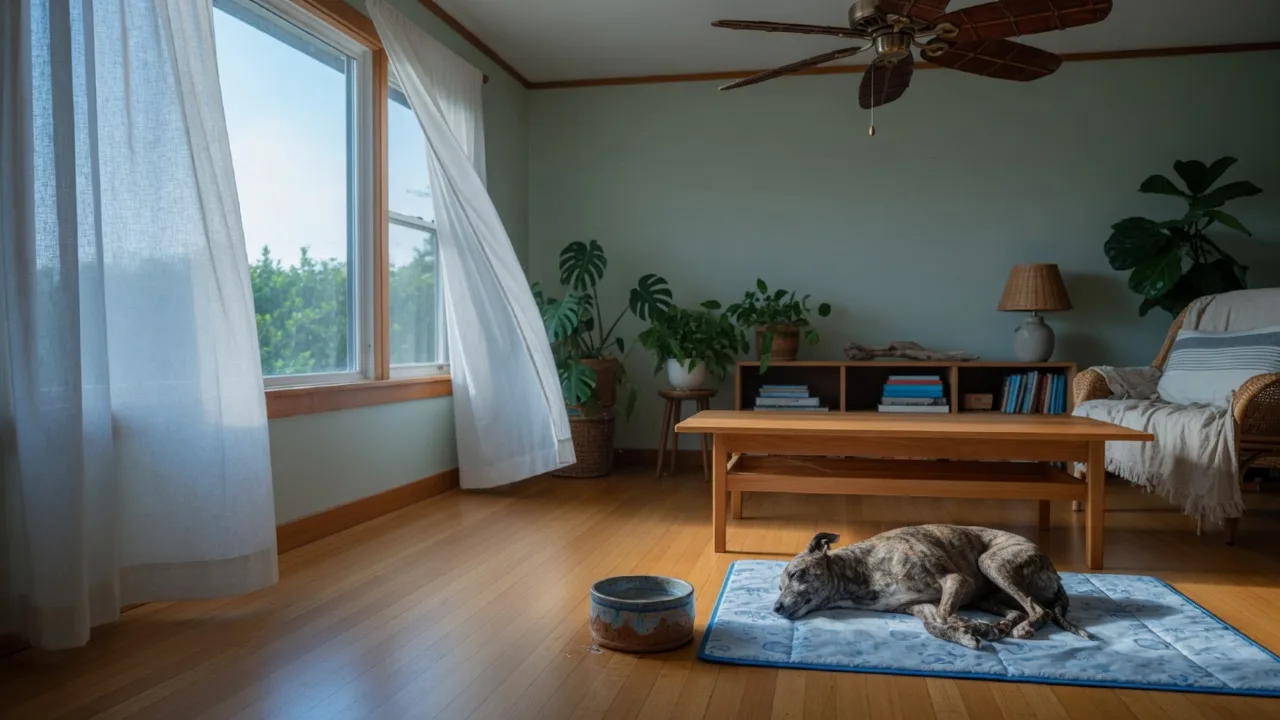
Most homes in Victoria do not have air conditioning. Statistically, about one in five households in the city has AC, which puts us among the lowest rates in Canada. The reason is obvious to anyone who has lived here: our summer average is around 22 degrees, and the marine breeze usually cools things off by late evening. But those 3 to 5 days each summer when the mercury hits 28 or higher, and especially during a heat event like the 2021 heat dome, the lack of AC becomes a real problem for dog owners.
Dogs do not sweat like humans. They cool themselves primarily through panting and through their paw pads. When the indoor temperature stays above 26 degrees overnight, they cannot recover from the day's heat, and that is when heat stress sets in. I have been through three Victoria summers with Ziggy in a south-facing condo with no AC, and two summers in a house with better airflow. The difference in his comfort level was dramatic, and it taught me exactly what works and what does not.
What is the best window strategy for cooling a Victoria home without AC?
The single most effective thing you can do is control when windows are open, not just leave them open all day hoping for a breeze. In Victoria, the coolest air arrives around 8:00 PM to 10:00 PM when the marine breeze moves inland. That is when you open every window that creates cross-ventilation. In the morning, once the outside temperature matches the indoor temperature (usually between 9:00 AM and 10:00 AM in summer), you close the windows and pull the curtains on the south and west sides of the house.
A box fan in a window facing away from the sun, set to exhaust mode, pulls hot air out of the house and draws cooler air in through other windows. This works best in a home with windows on opposite sides. If your home only has windows on one side, a single fan blowing inward at night is still helpful. The key is sealing the house up during the heat of the day. Leaving windows wide open at 2:00 PM in a Victoria summer just lets 28-degree air pour into your living room.
Which cooling products actually work for dogs?
I have tried most of the options, and some are worth the money while others are not. Cooling mats that use pressure-activated gel are effective for about 2 to 3 hours before they need to recharge (they reabsorb heat from the room and need a cool surface to reset). I keep one on the tile floor in the kitchen for Ziggy, and he moves onto it when he gets warm. The raised cot-style beds are better than padded beds in summer because air circulates underneath. The Kuranda-style cot beds are popular for a reason.
A frozen 2-litre water bottle wrapped in a thin towel is my emergency cooling tool. I keep one in the freezer from June through August. When Ziggy comes in from a walk and flops down panting hard, I put the frozen bottle next to him with the towel between it and his fur. He leans against it on his own within a few minutes. A damp towel spread on tile or concrete is another low-tech option. Most dogs will find it and lie on it without being told.
How do ceiling fans compare to floor fans?
Ceiling fans are better because they move air across a larger area, creating a wind-chill effect that helps dogs cool themselves through panting. A ceiling fan running counterclockwise in summer creates a downdraft that feels like a breeze. Floor fans work best when positioned to blow air across the floor, where the dog is lying, not at human face height. A floor fan blowing directly at a panting dog helps them exchange hot air more efficiently.
One thing I learned the hard way: fans do not cool a room, they cool the occupants. A fan running in an empty room with the windows closed just moves warm air around. The fan only helps when it is blowing on your dog (or you) directly. Turn it off when you leave the room.
What should I do during a heat dome or extended hot spell?
Victoria's heat events are rare but real. During the June 2021 heat dome, temperatures hit the mid-30s across the city, and homes without AC became dangerous for dogs. If you are in a multi-day heat event, here is what I do:
- Get the dog out of the house during peak heat. A morning walk before 7:00 AM and an evening walk after 8:00 PM. Keep it short and on grass or shaded trails, not pavement.
- Find cool public spaces. Some pet-friendly stores in Victoria welcome dogs inside and have AC. Lee Valley Tools, Canadian Tire on Hillside, and Bolen Books in Hillside Mall are options for a short, cool break. Call ahead to confirm current policy.
- Use wet towels strategically. A towel soaked in cool (not cold) water, wrung out, and draped over your dog's back and neck helps them cool down. Replace it every 30 minutes as it warms up.
- Monitor for heat stress. Excessive panting, drooling, staggering, or a deep red tongue are warning signs. If your dog stops panting and starts breathing shallowly, that is an emergency. Get to the vet immediately.
How does a home's layout affect indoor temperature for dogs?
This is where the real estate angle comes in, and it matters more than people realize when choosing a home for a dog in Victoria. A south-facing home with large west-facing windows and no shade trees will run 5 to 8 degrees hotter inside than a north-facing home with mature deciduous trees and good cross-ventilation. I have felt the difference firsthand: our old south-facing condo in James Bay would hit 30 degrees by 3:00 PM on a warm day, while our current home in Saanich with north-facing bedrooms and a covered back deck stays under 25 degrees without any active cooling.
When we help dog-owning clients evaluate homes, we look at: which direction the main living spaces face, whether the windows open fully (some newer condo windows only tilt, which limits airflow), whether there are mature trees on the property or adjacent lot, and whether the home has a basement or a cool ground-floor room where the dog can retreat on hot days. A home with a north-facing shaded backyard is worth a premium for a dog owner, even if the house itself is smaller.
What about portable AC units?
Portable air conditioners are a realistic option for a single room. They start around $400 to $600 and require a window kit for the exhaust hose. For a dog owner in a Victoria home without central AC, a portable unit in the bedroom or living room where the dog spends the most time makes a measurable difference. The newer dual-hose models are more efficient than the single-hose ones. If you buy one, get a unit sized for the room, not the whole house, and install the window sealing kit properly so you are not cooling the outdoors.
A cheaper alternative is a swamp cooler (evaporative cooler), but these do not work well in Victoria because they rely on dry air to evaporate water and cool the space. Our coastal humidity makes swamp coolers mostly useless. Stick with a proper portable AC or a well-placed fan setup.
What neighbourhoods in Greater Victoria stay naturally cooler?
The neighbourhoods with the most mature tree canopy run cooler in summer. Gordon Head in Saanich has some of the best tree cover in the region, with large lots and deciduous trees that shade homes naturally. Broadmead and the Uplands in Oak Bay have similar canopy cover. The Westshore communities like Langford and Colwood tend to have less established tree cover in newer developments, which means more sun exposure and higher indoor temperatures.
Proximity to the water also helps. Homes a few blocks from Dallas Road, in Fairfield or James Bay, catch the afternoon sea breeze more consistently than homes inland. But those same homes can have less tree cover, so it is a trade-off. The homes that stay coolest for dogs are the ones with both water proximity and tree cover, which usually means the older, established neighbourhoods with mature landscaping.
Related guides
For the full guide to heat safety for your dog, our summer heat safety guide covers walking schedules and hydration. Our heat stress vs heatstroke guide helps you tell the difference between a dog that needs cooling and a dog that needs a vet. And our guide to yards and outdoor space for dog owners covers what to look for in a home with a dog-friendly yard.
If you are looking for a home that stays cool naturally, with good airflow, shade, and space for your dog, the Happy Homes Team can help you find it. We know which neighbourhoods run cool in August and which homes have the kind of cross-ventilation that keeps dogs comfortable without AC. Book a call to talk about your next move.