
In This Checklist
Moving is a big enough job without a dog. Add one, and every decision, from the rental ad you answer to the box you pack last, comes with a second set of requirements tacked on: the pet clause you need in writing, the ferry boarding rules, the licence your new municipality will expect within weeks. That is why moving with a dog needs a plan, not just a truck. This checklist covers the whole move in three phases, before, during, and after, in the order you will actually need to think about them.
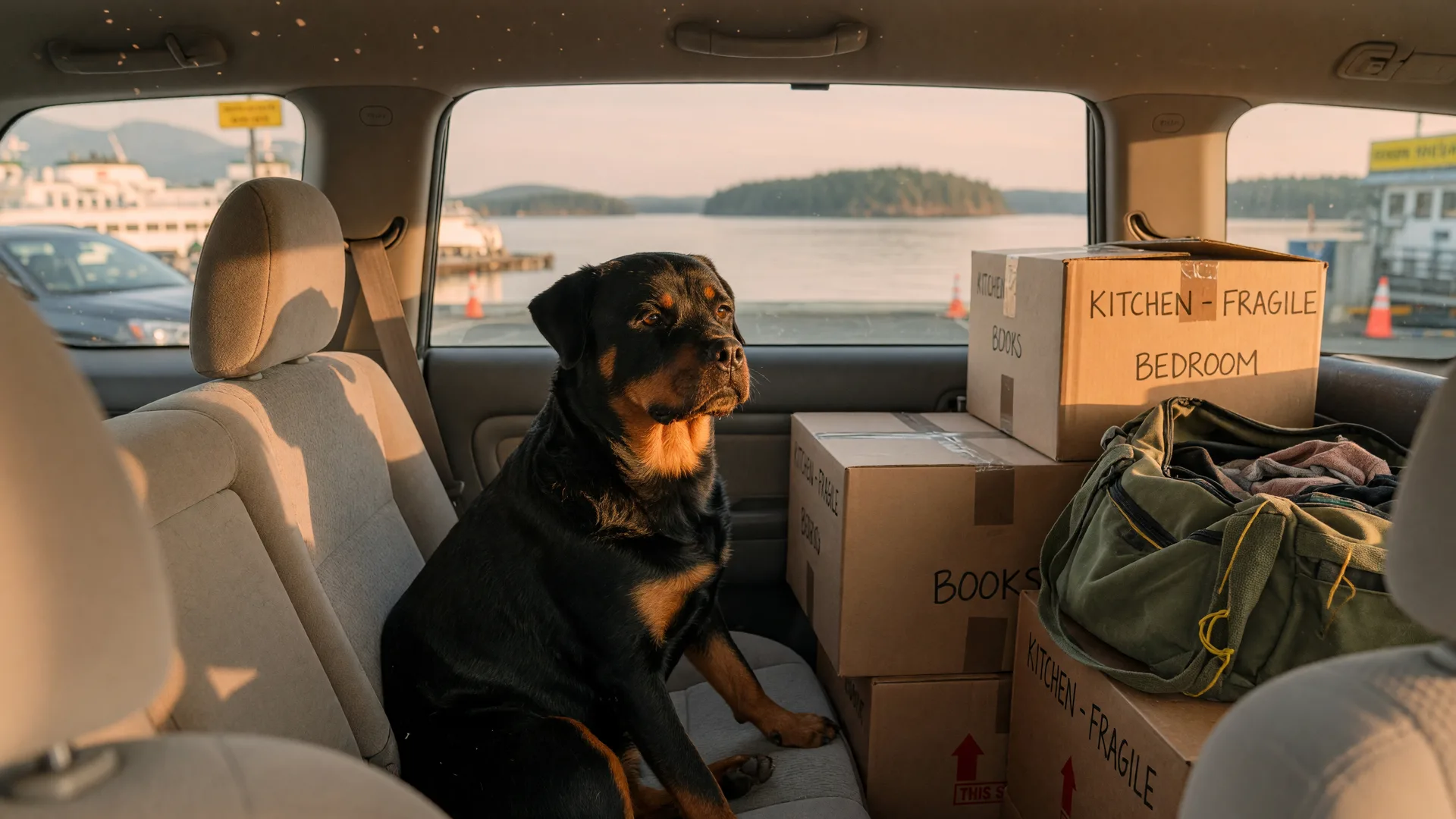
We write it as people who live here and have helped newcomers make this exact move. We are Anna Hakim and Perry Fanthorpe of the Happy Homes Team at eXp Realty in Victoria, and our dogs Ziggy, a 6-year-old Rottweiler, and Sahara, a 13-year-old Lab mix, are the official Chief Canines of this guide. When you want the long version, our complete guide to moving to Victoria with your dog goes deeper into neighbourhoods, vet clinics, and housing.
Grab the free relocation checklist and keep every step, from rental research to week one, in one printable place.
Before You Move
Most of the work happens before the truck arrives. Get the housing research, the records, and the travel plan done early, and moving day becomes mostly about keeping your dog calm and accounted for.
Research pet-friendly rentals, in writing
Before you commit to a place, get the pet rules in writing. Ask for the pet clause in the tenancy agreement, whether a pet damage deposit applies, and whether there are weight, breed, or number-of-dogs limits. In British Columbia a landlord can charge a pet damage deposit when pets are allowed, capped at half a month's rent on top of the security deposit. The provincial pages on pets and tenancy and deposits and fees spell out what is allowed. For the local read, our guide to pet-friendly rentals in Victoria covers what landlords here actually ask for.
Check strata and condo pet rules
If your new home is a condo or townhouse, the strata bylaws govern pets, not just the landlord. Strata corporations in BC can no longer simply ban pets outright, but they can still set reasonable limits such as size caps or a maximum number of dogs. The provincial strata pet bylaw pages explain how it works. Get the pet rules in writing from the strata; a verbal "it is fine" does not survive the move.
Collect records and update the microchip
Gather the vaccination history and any health records from your current vet, and ask for copies to hand to the new clinic. Update the address and phone number linked to your dog's microchip; the registry needs your new contact details, not just the chip in the dog. Take a recent photo of your dog too. It makes a licence application, an ID card, or a lost-dog poster much easier if you ever need one.
Know the entry rules for a dog coming into BC
Moving within Canada means no quarantine for your dog. The Canadian Food Inspection Agency import rules apply to dogs entering the country from abroad, not to a move between provinces. Still, carry proof of current rabies vaccination; vet clinics want the history on file, and the licensing office in most municipalities asks to see it before issuing a tag. Update the records before you go, not after.
Plan the transport: ferry or flight
Driving, you cross on BC Ferries from Tsawwassen to Swartz Bay. Dogs ride free, must stay on a leash no longer than one metre, and wait in your vehicle or the designated pet areas on board. Check the current rules on the BC Ferries pet travel pages before you sail, and our guide to the ferry with your dog walks through the crossing. Flying, every airline sets its own rules on cabin versus cargo, carrier size, and health certificate timing, so read the carrier's pet policy directly and book early; our guide to flying out of Victoria with a dog covers the details.
During the Move
Travel day is about keeping your dog safe, calm, and attached to you. The boxes and the strangers moving them are all new; your dog should be the last thing packed and the first thing settled.
Secure your dog in the vehicle. A crash-tested crate or a properly fitted harness restraint keeps a nervous dog safe and stops one from ending up in your lap on the highway. Never let a dog ride loose in the cargo area.
Never in the moving truck. The back of a moving van is dark, loud, and full of shifting furniture. Your dog rides with you, in the car, restrained. The moving truck carries boxes only.
No escape routes near the truck. While the movers carry boxes in and out, a nervous dog can slip past an open door in a second. Keep your dog out of the loading zone entirely: in the car, in a closed room, or with someone who is not carrying boxes.
Plan breaks with food and water. On the drive to the island, stop every couple of hours for a short walk and fresh water. Keep a bowl, food, water, and waste bags in the door pocket, not buried in a box.
Current ID tag on the collar. Make sure the tag shows a phone number you can answer, and add the new address once you know it. A dog spooked at a rest stop or a ferry queue can bolt; current ID is the best insurance you can pack.
Right After You Arrive: Week One
The first week is mostly admin, but it is the admin that keeps your dog legal, healthy, and safe: the licence, the vet, and a gentle introduction to the new block.
Licence your dog in your new municipality
Dog licensing is required in every Greater Victoria municipality for dogs over four months, and the tag on the collar must be for the current year. Rules, deadlines, and fees are set by each municipality, so use the official page for your town rather than trusting an old fee list. Most renewals can be done online once you are set up. For the step-by-step, our guide to licensing your dog in Victoria walks through it.
Find a vet and an after-hours emergency clinic
Book a new-patient visit so your dog's records transfer smoothly, and hand over the vaccination history you packed. Then save the number for after-hours emergency care before you need it. Most clinics refer overnight and weekend cases to one of Greater Victoria's emergency hospitals, and knowing which one serves your neighbourhood in advance saves a panicked search at 11pm. Our guides to choosing a vet and emergency vet care cover the options.
Find a groomer and a dog walker or daycare if you need them
If you work away from home, or your dog needs regular grooming, line these up in the first week. Good dog walkers and daycares book out, and it is much easier to find a good fit while your dog is still relaxed. Our guide to dog daycare and boarding around Victoria lists the options.
Take the first walk on leash
Walk the new block on leash, a few times, before you introduce any off-leash freedom. Your dog needs to learn the smells, the street noise, and where home is before they earn the long line. Keep those first walks short, boring, and full of treats.
Settling In
The boxes stop moving and the dog starts decompressing. This phase is about building a normal life, at your dog's pace, and learning the rules of the new place.
Register with the licensing office if not already done
If the licence has not happened yet, this is the week. It is a short form in most municipalities, and a current tag means your dog is legal for the daily walks, the parks, and the beach. The official links in the week-one section take you straight to your town's page.
Find off-leash parks and beaches
Greater Victoria has more off-leash space than most cities its size, but the rules vary by municipality and by season, so check the signage at each park rather than assuming. September is the month the big summer restrictions lift: Gonzales and Cordova Bay beaches switch to off-leash for the fall, and the crowds thin out. Our complete off-leash park guide and dog-friendly beach guide list the spots with their exact windows.
Know the lake water caveat
Thetis Lake is the closest thing many newcomers find to a swimming hole for dogs, but it shows up on blue-green algae advisories most summers, and dogs are the ones who pay the price. Before you let your dog in any lake, check the latest alert; we keep the current status and symptoms in our blue-green algae guide.
If you rented, confirm the written pet agreement
Dig out the tenancy agreement and re-read the pet clause now that you are in. Confirm what is actually in writing: the deposit, any limits, and which shared spaces your dog can use. If something was promised verbally but never written down, raise it with the landlord early.
Meet the neighbours
Say hello to the people next door and let them meet your dog on leash. A dog who knows the neighbours settles faster, and you will want those introductions before you need a favour, like a yard watch or a dog-sit.
Let your dog settle at their own pace
Give your dog a quiet corner with their bed and crate, keep the routine predictable for the first couple of weeks, and do not force the social calendar. Some dogs land in a day, some take a month. Boring and steady wins.
Worth Knowing
Three things we wish every newcomer knew before they landed:
Renting with a dog in Victoria takes planning. Pet-friendly rentals go fast, and every landlord has their own rules, so start your search early and get everything in writing. Our rental guide explains the local market, the deposits, and the questions worth asking.
Off-leash does not mean everywhere. Each municipality sets its own leash rules, park by park and season by season. What is off-leash in Saanich may be strictly on-leash in Oak Bay. The off-leash parks guide and the neighbourhood hub break it down by area.
The full guides live here. When you have moved in, walk the complete moving to Victoria guide, which covers neighbourhoods, vets, and services in more detail than a checklist ever could. Anna and Perry are real estate agents, and we have helped dozens of families make this exact move. If you are weighing up which neighbourhood fits you and your dog, say hello, or book a time to talk.
Ready to make the move?
Download the relocation checklist so nothing slips between the packing tape and the first walk in your new neighbourhood.