Why Does My Dog Eat Goose Poop on Victoria Walks, and How Do I Stop It?
By Anna Hakim & Perry Fanthorpe, Happy Homes Team at eXp Realty
The Short Answer:
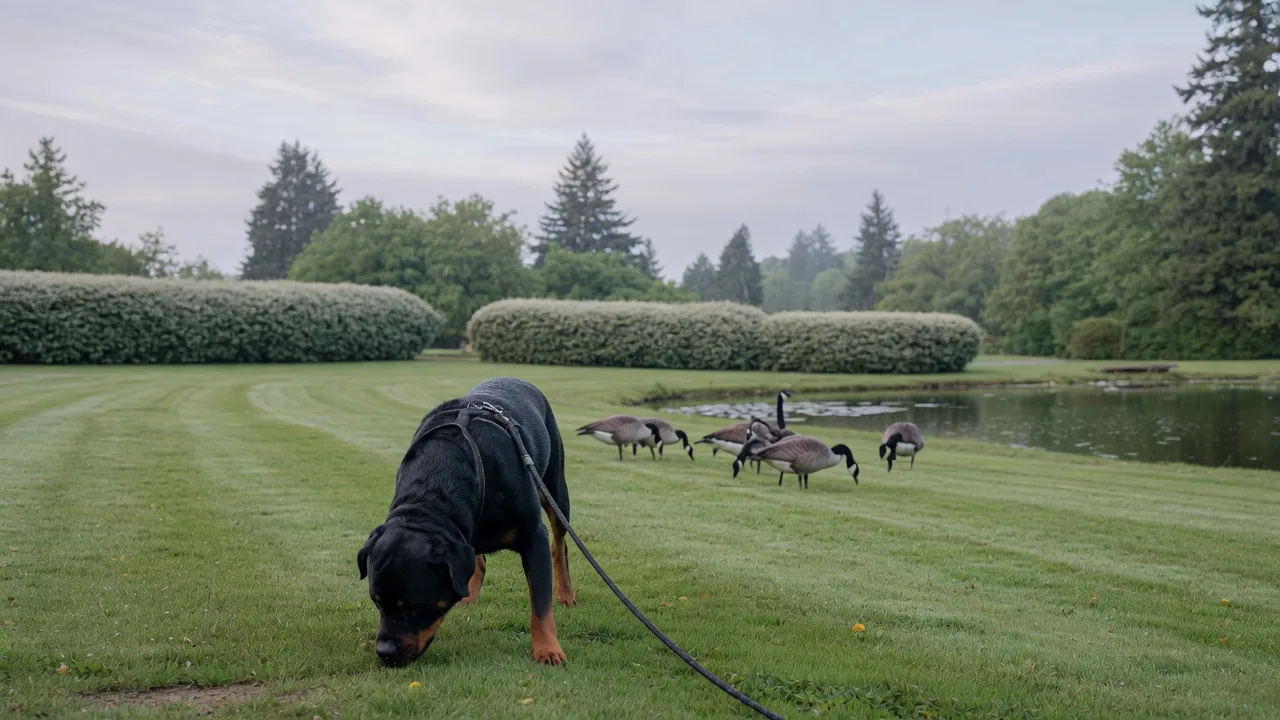
Dogs eat goose poop because it smells and tastes fascinating to them, and Greater Victoria hands them an endless supply. Canada geese graze the lawns around Goodacre Lake in Beacon Hill Park, the grassy slope above Clover Point, and the flats at Esquimalt Lagoon, and every adult goose leaves behind as much as a pound or two of droppings a day. The habit looks awful and is usually harmless, but the risk is real enough that you should manage it instead of shrugging it off.
This is one of those questions we answer at off-leash parks more than anywhere else. Ziggy has walked past a thousand goose piles without a second glance, and Sahara has made a few unfortunate choices, so between the two of them we have seen both sides of the debate.
Why do dogs eat goose poop in the first place?
To a dog, fresh goose droppings smell and taste a lot more interesting than they do to us. They are mostly digested grass, and dogs process the world through their noses and mouths. Puppies are the worst offenders because everything goes in the mouth while they learn what is food, but adult dogs pick up the habit too, usually out of boredom on a familiar route or sheer delight in something smelly that moves.
It is not a sign of a bad diet. A dog on good food will still eat goose poop if the opportunity is right, which is why the fix is behavioral, not nutritional. We have seen clients switch foods, add supplements, and buy a dozen fancy treats trying to solve this, and the answer stayed the same: training and management beat the shopping cart.
Where are the worst goose-poop spots in Greater Victoria?
The geese are resident here, not just winter visitors, so their droppings are a year-round feature of the lawns they graze. Beacon Hill Park, especially the open grass near Goodacre Lake, is the classic spot, followed by the grassy strip along Dallas Road at Clover Point, the lawns at Esquimalt Lagoon in Colwood, and the open fields at Thetis Lake and around UVic.
This is a known regional problem, not your imagination. The CRD runs a Canada Goose Management Strategy that aims to bring the local population down from roughly 6,000 toward 1,000, and playing fields in the region have at times been closed because of the sheer volume of droppings. Until the numbers come down, the board walks and the grass edges are the safer lines for a dog on a mission.
Is eating goose poop dangerous for my dog?
Goose droppings are not acutely toxic, but they can carry bacteria and parasites: Salmonella, E. coli, Campylobacter, Cryptosporidium, and occasionally Giardia. A healthy adult dog with a strong stomach often eats a pile and never shows a symptom. Puppies, senior dogs, and dogs with a history of gut trouble are the ones you need to watch, because their immune systems do not shrug off the same load.
The signs to watch for over the next couple of days: vomiting, diarrhea that can be bloody, a fever, sluggishness, or a dog that stops eating. Giardia and Cryptosporidium are the sneaky ones, causing diarrhea that seems to clear up and then returns over days or weeks, often with weight loss, so a dog that ate goose poop and then develops a lingering soft stool is worth a vet visit rather than a wait-and-see.
When should I call the vet?
A single quick mouthful on a walk does not usually need a phone call. Rinse their mouth, count it as a training moment, and watch them for the next day or two. Call your vet if they ate a large amount, eat goose poop repeatedly, or develop vomiting, diarrhea, fever, or a drop in energy within about 48 hours.
Many local clinics, including Hillside Veterinary Hospital and Vic West Pet Hospital, will talk you through symptoms over the phone before you decide. For evenings and weekends, the 24-hour options in Greater Victoria are Central Victoria Veterinary Hospital and WAVES, and your regular clinic's answer message will tell you which one handles its after-hours care.
How do I stop my dog from eating goose poop?
Start with "leave it." Build it at home with kibble or treats on the floor, then take it outside where the stakes are higher. The version that works on a walk is: shorten the leash, say "leave it" the moment you see the dog's nose swing toward a pile, and reward the look back at you, then keep walking. Five minutes of practice a day beats an hour of frustration at the park.
Management does the rest of the work. Keep moving past goose-heavy lawns instead of letting your dog graze in the middle of the grass, walk the path edges and the boardwalk, and plan around the geese: they do most of their grazing in the early morning and again in the late afternoon. A front-clip harness or a head halter gives you control before the mouth lands, and both are easy to find locally.
Should I use a muzzle for a dog that eats goose poop?
For the serious cases, yes, and a basket muzzle is the honest tool. A properly fitted basket muzzle lets a dog pant, drink, and take treats while making it physically impossible to vacuum the lawn. Most dogs adjust within a few short walks, and any local trainer or the staff at a good pet supply store can help you fit one. It is a better answer than a lifetime of goose poop snacks and the vet bills that can follow.
One more habit worth keeping: pick up after your dog promptly even in goose-heavy areas, and carry a collapsible bowl so you can rinse their mouth after a hit. The geese are not leaving any time soon, so the goal is a dog who looks at a pile and keeps walking.
What does goose poop have to do with where you live?
More than you would expect. For a dog that treats lawns as a buffet, a fenced yard changes the daily math completely: the walk stops being a negotiation over every goose pile and becomes a choice. It is one of the small, unglamorous reasons we always ask buyers about fencing and their planned walk routes before the offer goes in, and why we flag which neighbourhoods back onto goose-heavy grass.
Homes near Beacon Hill Park, Clover Point, and Esquimalt Lagoon are lovely, and they come with geese. If you are weighing one of those areas with a poop-eating dog in your life, or you just want an honest read on which yards and blocks will make daily dog life easier, book a consultation with the Happy Homes Team and we will walk the routes with you in mind.
Choose the Home Where the Daily Walk Routine Works, Not Just the One with the Best Lawn
Fencing, yard size, walk routes, and the closeness of goose-free trails are all real factors in the buying decision. The Happy Homes Team matches homes to dogs, not just buyers to listings.
Book a Consultation