
How Do I Walk My Dog Safely After Dark in a Victoria Winter?
By Anna Hakim & Perry Fanthorpe, Happy Homes Team at eXp Realty
The Short Answer:
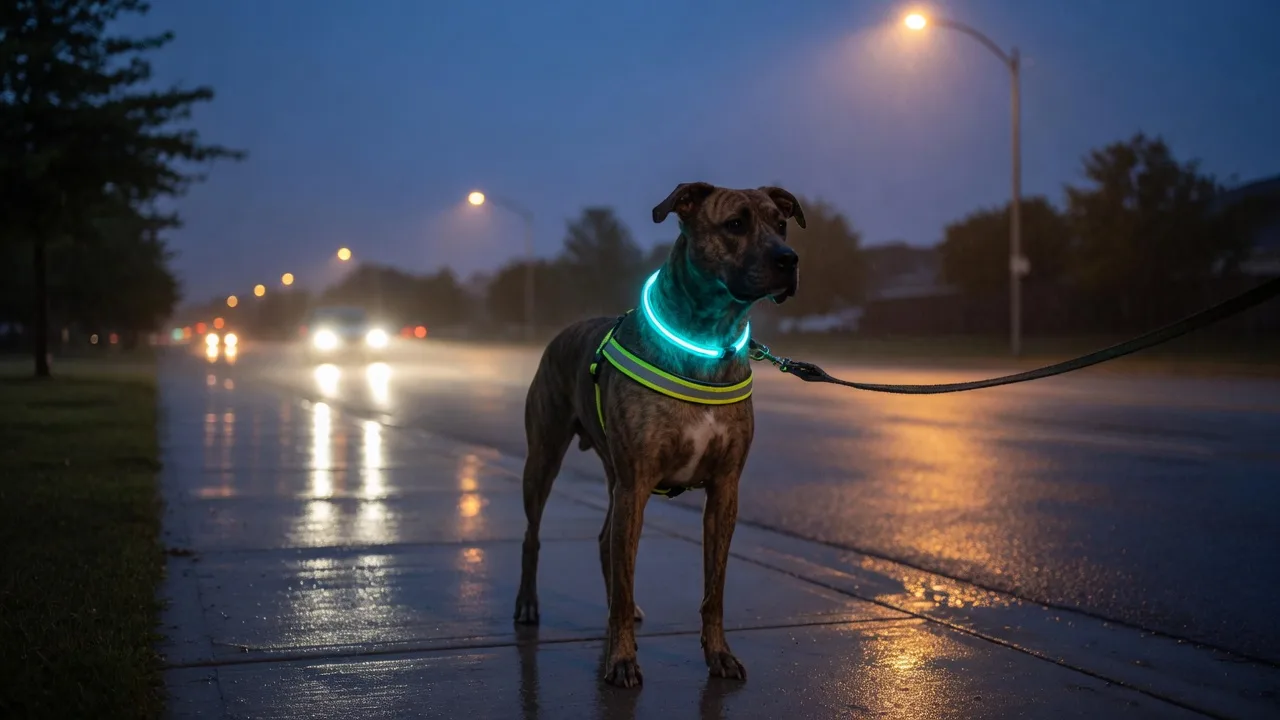
A safe after-dark dog walk in a Victoria winter starts before you leave the house: you light the dog up, you light yourself up, and you put the retractable leash away. The sun sets around 5:20 p.m. in early December, it is fully dark half an hour later, and the rain eats the light that is left, so a dark dog in a dark jacket on a dark sidewalk is a risk you can fix in under two minutes. We have walked every winter since Ziggy joined us as a puppy, and the routine is simple enough that we use it every single night.
This is the season when it stops being about walk distance and becomes about walk visibility, so here is the honest, tested version of how to do it in Greater Victoria.
How dark do Victoria winters actually get?
Darkness is relative on this coast. The sun sets around 5:20 p.m. in early December and it is fully dark about 30 minutes after that, but the bigger problem is the rain. Steady drizzle cuts a driver's ability to see a dog on the road's edge far more than the clock does, and our rainfall peaks right in the darkest months.
The numbers back the worry. ICBC reports that nearly half of the crashes that injure pedestrians in BC happen between October and January, the exact window when dog walkers in Victoria are suddenly walking at dusk or in the dark. That is a reason to be visible on the walk, and the simple fixes are cheap and fast.
What should my dog wear at night?
Start with a light, not just reflectors. A slim LED collar light or a clip-on light on the harness makes your dog readable as a moving creature from a block away, while reflective trim only works when headlights are actually aimed at it. Lights are cheap, run for months on a coin battery, and survive a rainy November. Brands like Ruffwear and Nite Ize make the versions dog owners here actually buy.
Add a reflective harness or vest over the top, especially for short-coated and dark-coated dogs, because a black Rottweiler at dusk is invisible until the moment it is too late. Layering light and reflector is the difference between being seen and being looked at twice.
What about the person holding the leash?
Drivers do not just need to see your dog, they need to see you, so put something bright on yourself too. A reflective strip on your jacket, a clip light on your collar, or a headlamp keeps you visible, and the headlamp does double duty: it lights puddles, ice, and the pile your dog is about to find before either of you steps in it. A small flashlight in your pocket is the old-school version that never runs out of battery at the wrong moment.
Light colors beat dark ones, mesh vests beat a single reflective logo, and the goal is to look like a person with a dog, not a shape in the dark. It is ninety seconds of preparation and it removes most of the risk from the whole walk.
Which leash rules apply after dark?
The same ones that apply in daylight. Under the City of Victoria's Animal Responsibility Bylaw 11-044, dogs must be firmly held on a leash in public places except designated leash-optional areas, and the rest of the region works the same way: on-leash on streets and sidewalks, off-leash only where a sign says so.
At night, the type of leash matters as much as the rule. A retractable leash's thin line is nearly invisible to a driver and gives you almost no stopping power, so switch to a fixed 1.8 metre leash for dark walks and keep the dog at your side near roads. It is also the right move for the next hazard, which most people do not see coming.
Are deer a real risk on winter evening walks?
Yes, and every November it surprises someone. Deer rutting season runs from late October through December, and deer are most active at dawn and dusk, which is exactly when your dog walk now happens. Victoria streets are full of deer at that hour: does feeding on verges, bucks on the move, and the occasional panicked dash across a road.
Keep the leash short and give any deer a very wide berth. A startled buck will not respect your dog's size, and a fast retreat through traffic is worse than a standoff. If you see one ahead, cross the street early and keep walking calmly, and never let an off-leash dog chase, regardless of the hour. Our wildlife post on deer, cougars, and raccoons covers the surrounding rules in full.
Where should I walk after dark in Greater Victoria?
Route planning beats gear. Pick streets with sidewalks and streetlights over unlit back lanes, and save the forest trails for daylight. For off-leash time after dark, a handful of parks have lighting, most reliably Colwood Creek Park and Alexander Park, while most others do not, so bring the headlamp and keep the dog close at the ones that stay open late.
Dallas Road and the waterfront paths are gorgeous at night, but they are also exposed and treeless, so the wind and rain hit harder there; the tree-lined neighbourhood blocks in Fairfield, Fernwood, and Victoria West are the comfort pick for a wet Tuesday in January. Choose the route before the walk, because decisions made in the cold and dark are usually bad ones.
What should I do when I get home?
Give the paws a quick check and rinse, because grit, sand, and the occasional de-icer build up on wet feet, and check the harness and light before you hang them up so the gear is ready for tomorrow. Most importantly, confirm the collar still fits snugly and carries the current-year licence tag, and keep your dog's microchip details current, because a dog that bolts at a deer or a car is only coming home if the tag and chip say where home is.
That last part is the one we see go wrong most often: people buy the light, skip the tag check, and then lose a dog on a dark walk in December. The tag takes ten seconds and it is the cheapest insurance you will ever buy.
What does the dark season have to do with where you live?
Everything, if you think about it for a minute. A home on a lit street with continuous sidewalks makes the 8 p.m. walk a pleasant routine instead of a negotiation with cars, and a fenced yard means the 10 p.m. pee run does not require the full night-walk kit at all. When we walk a neighbourhood with buyers, we look at streetlight spacing, sidewalk continuity, and the walk to the nearest lit park with the same seriousness as the kitchen, and we always tell people to drive a street at night before they offer on it.
If you are choosing between homes and wondering which one will actually work for your dog across a Victoria winter, book a consultation with the Happy Homes Team and we will walk you through it, ideally after dark.
Buy the House That Makes December Dog Walks Easy
Streetlights, sidewalks, distance to lit parks, and a fenced yard for the late-night pee run are all part of the real buying decision. The Happy Homes Team matches homes to dogs, not just buyers to listings.
Book a Consultation